
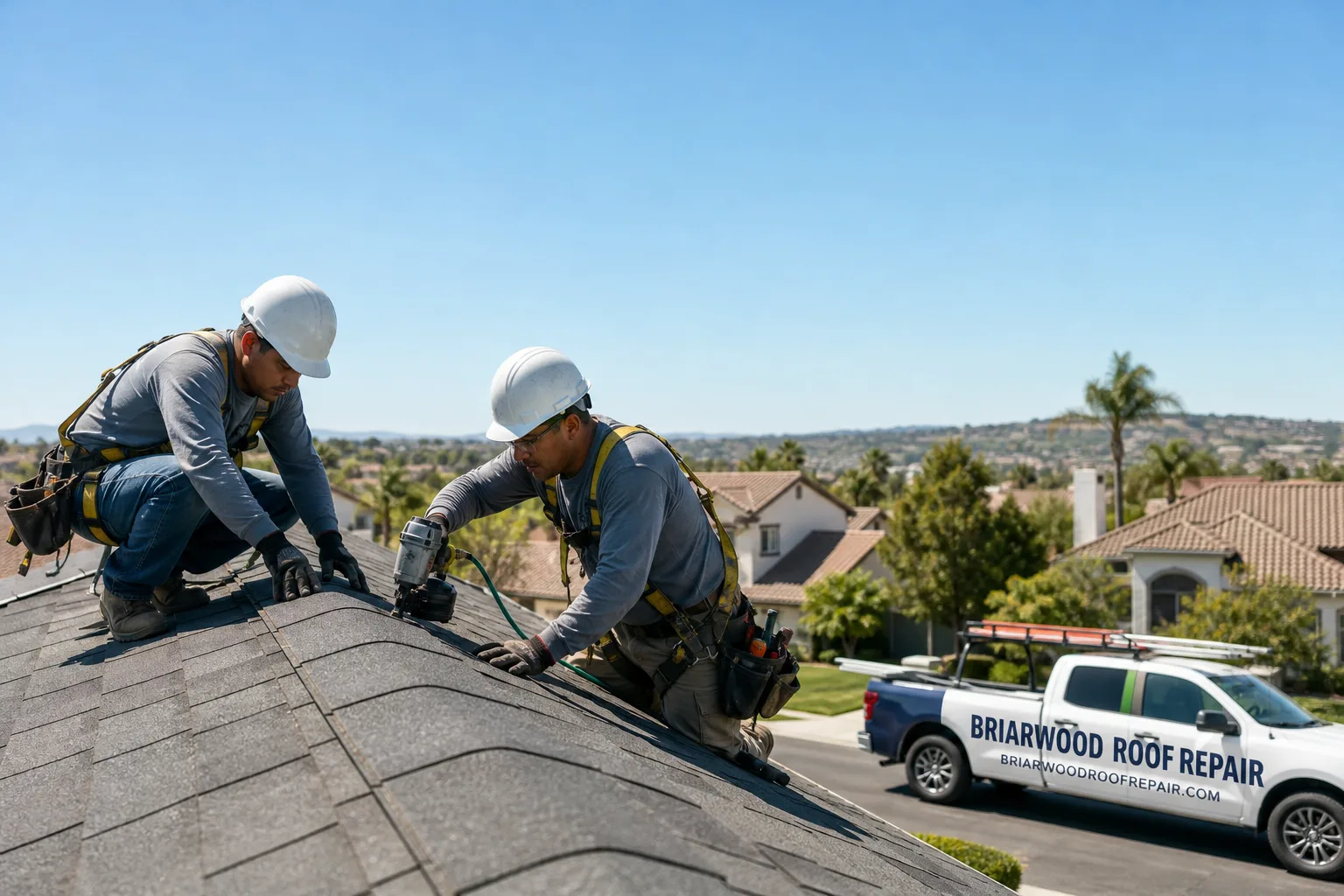
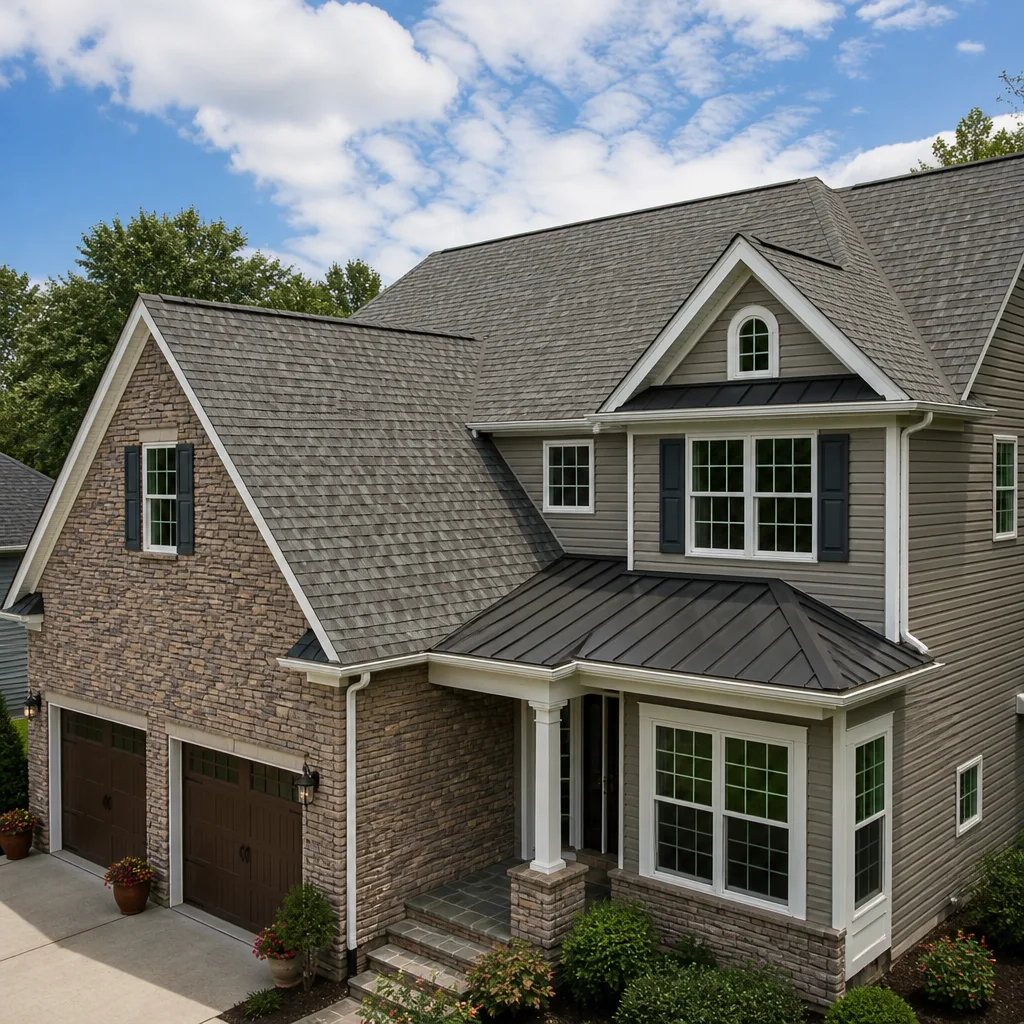
 Architectural shingles
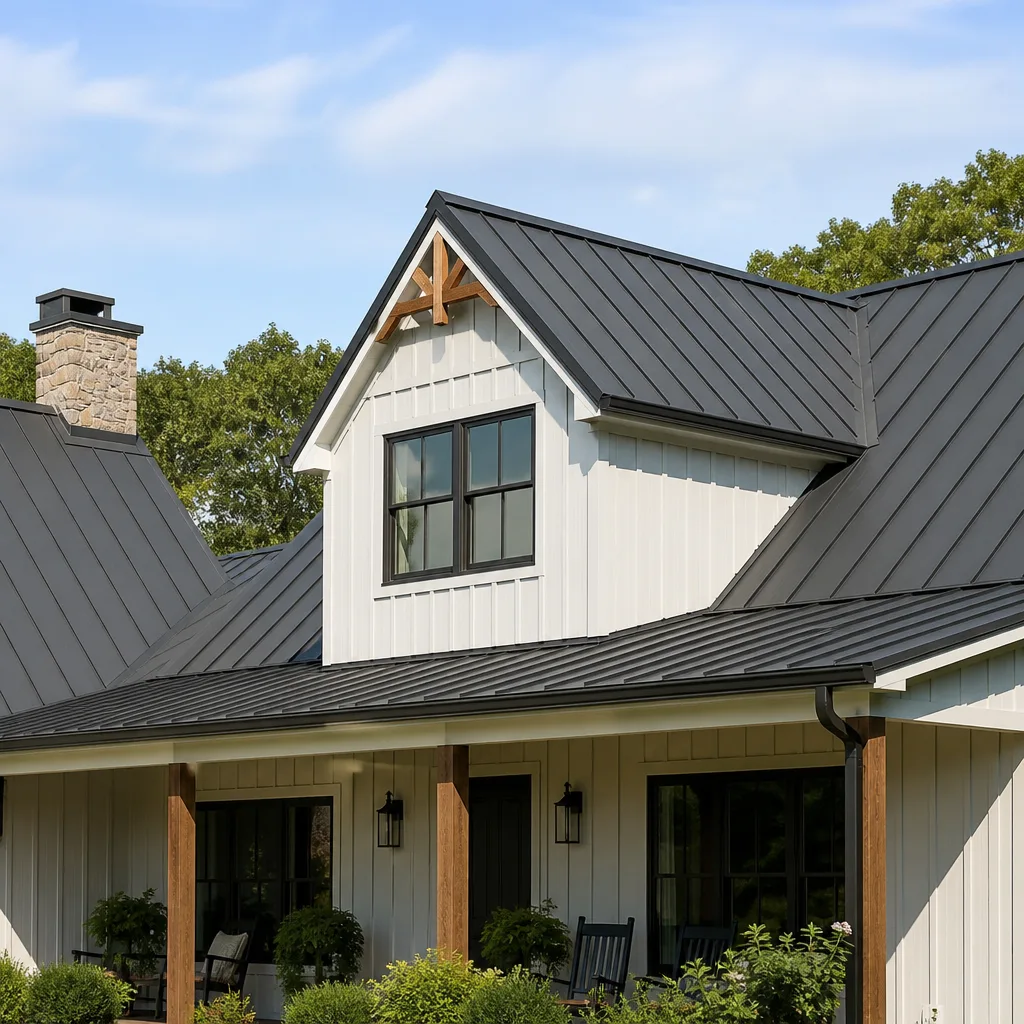 Metal roofing
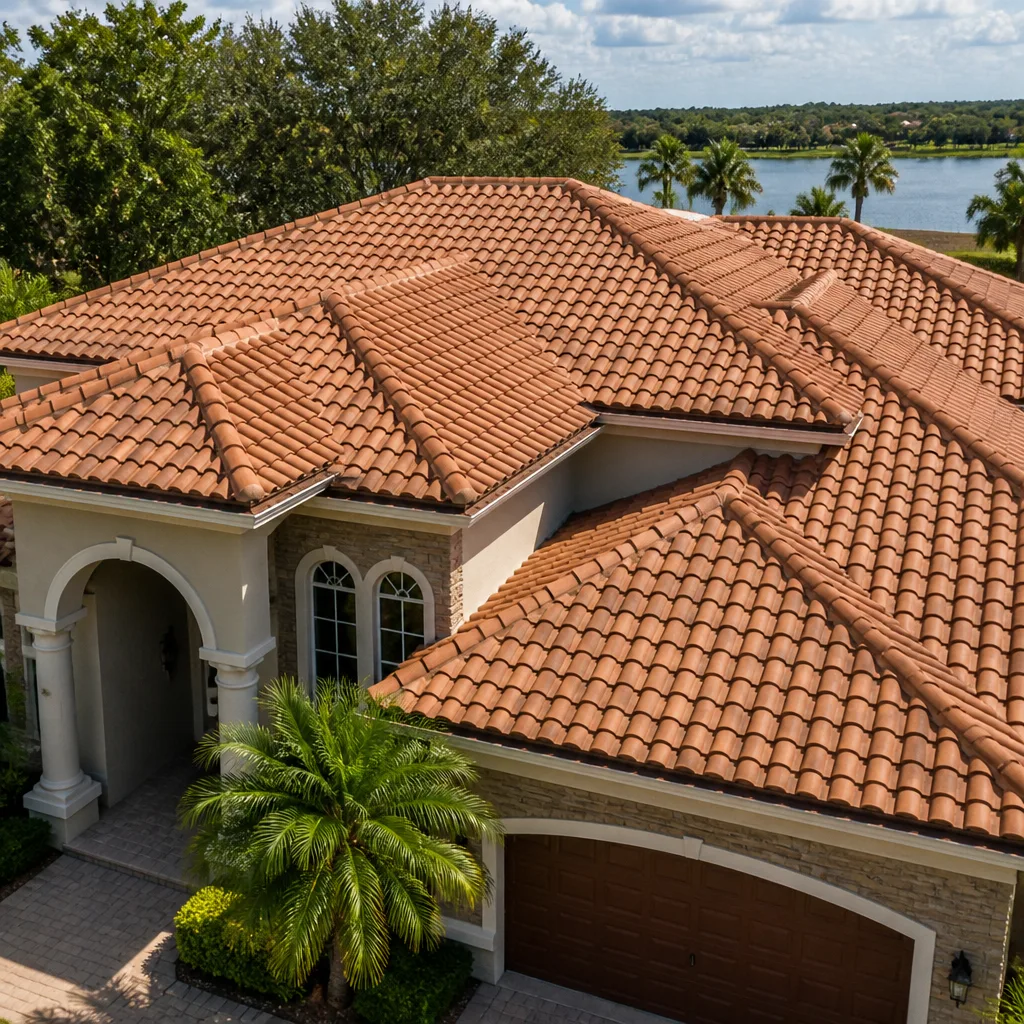 Tile roofing
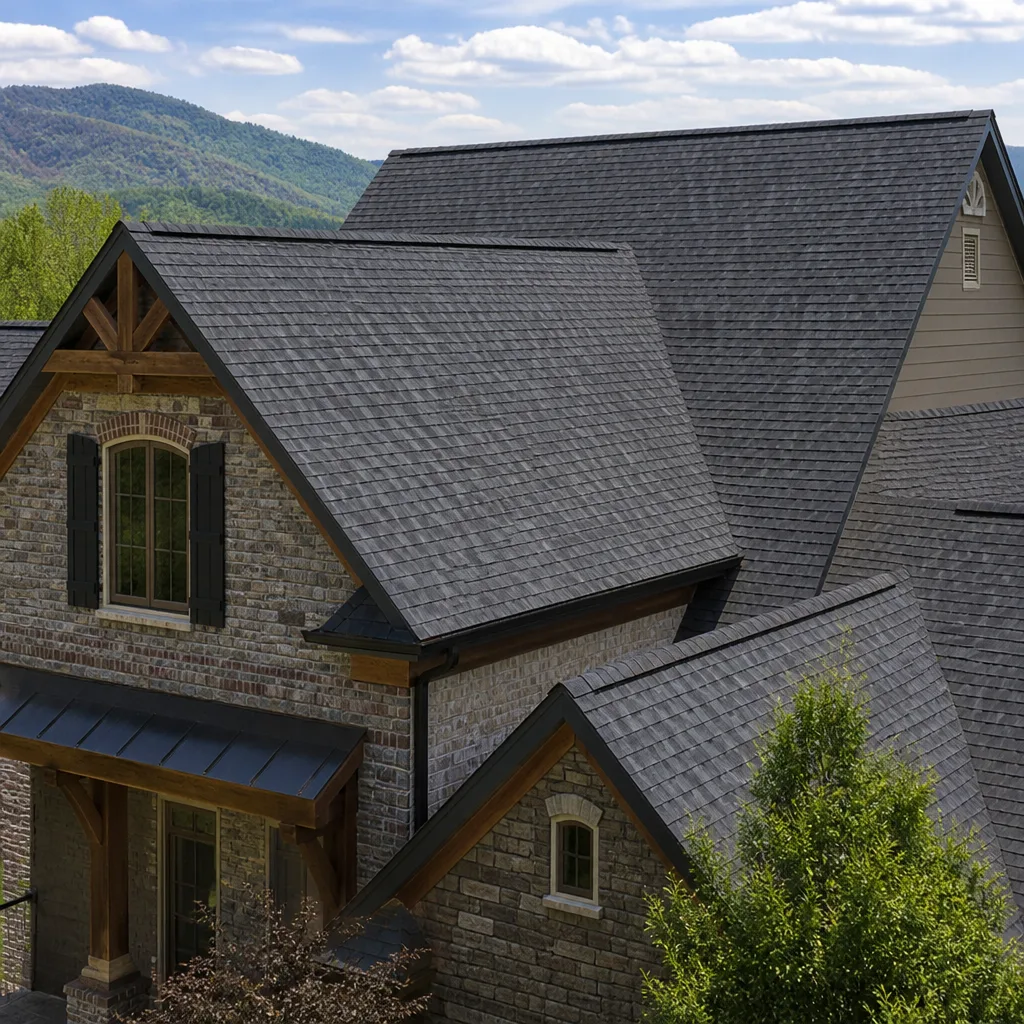 GAF
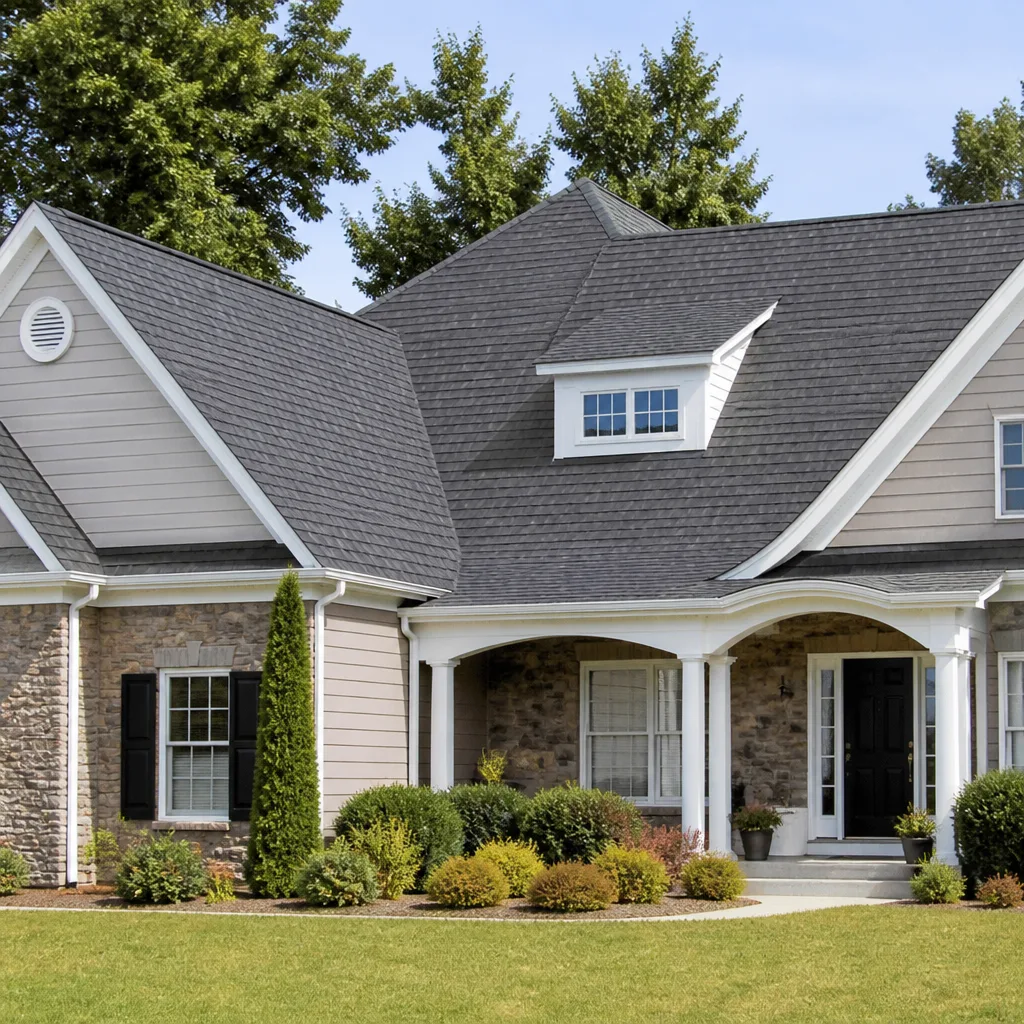 Owens Corning
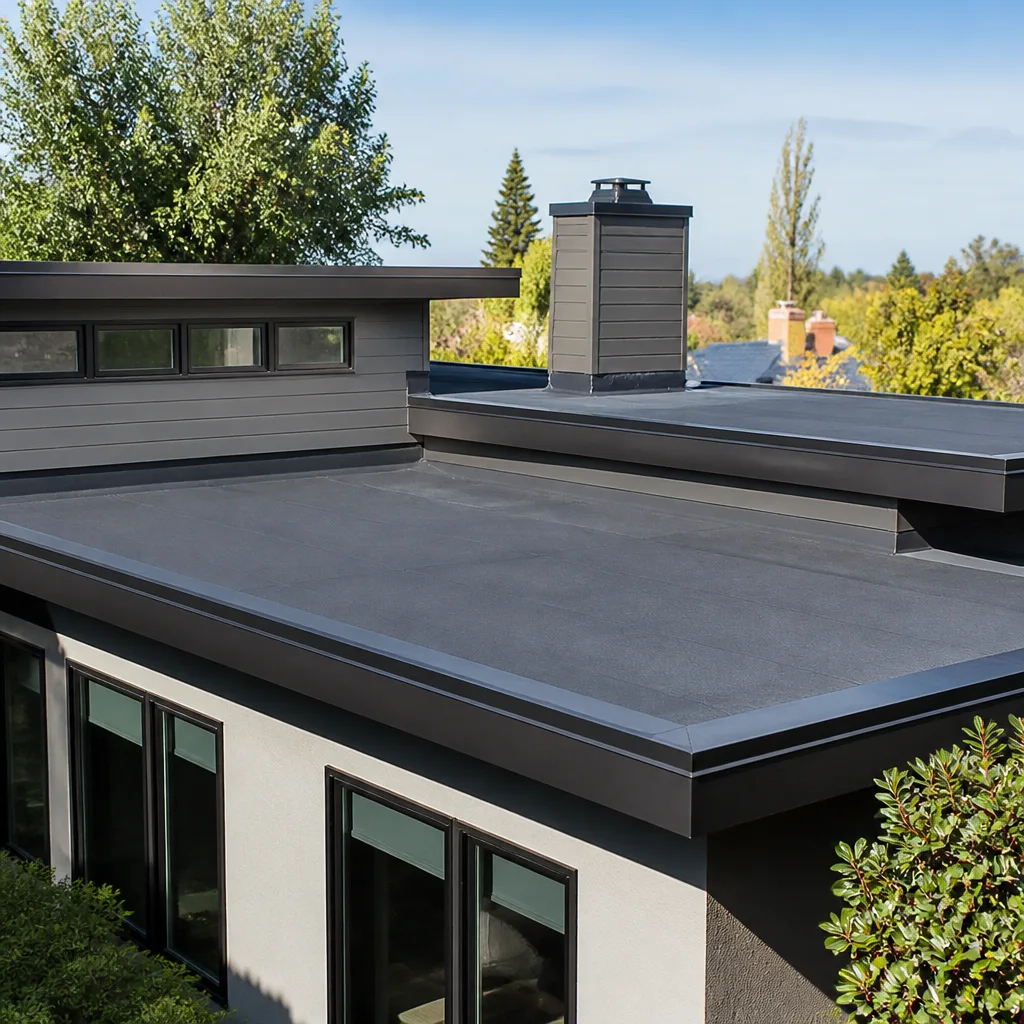 Flat & low-slope
Free roof inspection with deck photos before we talk money - GAF and Owens Corning certified installation
Fast, Reliable Roof Replacement Across San Joaquin Hills
Roof replacement in San Joaquin Hills isn’t a simple tear-off. It’s a process shaped by HOA architectural committees, steep ridgeline lots, and canyon winds that find every weak nail. If you’re researching costs, a full replacement on a typical 3,000 to 4,500 square foot home here runs $18,000 to $42,000 depending on material matching, access, and decking condition. We’ve handled enough of these to know exactly where the complications hide. Call (855) 707-6114 and we’ll walk your roof before you spend a dime.
Our Roof Replacement team works throughout San Joaquin Hills, from the gated enclaves off Ridge Park Road to the cul-de-sacs that back up to Laguna Canyon. We know which communities have the strictest tile-match rules and which slopes catch the worst Santa Ana gusts.
Why Briarwood Roof Repair Is San Joaquin Hills’s Preferred Roof Replacement Company
We don’t chase single-brand quotas. We match what’s already on your roof. That matters in San Joaquin Hills, where original clay and concrete tile profiles from the late 1980s and 1990s are often discontinued or available only through specialty distributors. Nolan Brewster built Briarwood Roof Repair around a simple principle: know all seven major shingle and tile brands, then let the roof tell you what it needs. If a Boral clay tile profile was discontinued in 2004, we don’t push a mismatched substitute. We track down the remaining stock or document a visually and dimensionally identical alternative for your HOA.
Homeowners here tell us the same thing after other estimates: “They gave me three options, all from one manufacturer.” That’s not how we work. We’re certified to work with GAF, CertainTeed in San Joaquin Hills, and Owens Corning alongside Boral, Atlas, IKO, and Tamko. If your HOA requires a specific tile profile, we spec around that constraint. If the HOA allows composite alternatives, we’ll show you exact matches across brands so you can compare with real numbers, not brochure language.
Styles & brands we work with
Reroofing in San Joaquin Hills
Reroofing in San Joaquin Hills means removing the existing tile or shingle layer down to the deck, replacing deteriorated decking, installing new underlayment, and re-setting a matched roof cover. Because most homes here were built between 1987 and 2005, we’re seeing the first full replacement cycle hit communities like Tiburon, Promontory Pointe, and Summit Pointe. A full reroof on a standard San Joaquin Hills home typically runs $20,000 to $38,000, with clay tile and synthetic slate at the higher end and architectural asphalt at the lower end.
Tile Profile Match Before Permit
Most cities don’t require a physical tile match trial before you file for a permit. San Joaquin Hills does, effectively, because the architectural committees review material submissions and will reject a profile that differs from the original. We bring a sample board to your first meeting, confirm the profile, and lock in the product before drawings go to the city. That single step has saved our clients six weeks of back-and-forth.
Underlayment and Valley Work
On reroofs here, we upgrade valley underlayment and edge detailing as standard. The wind-driven rain that comes down the canyon during November Santa Ana events pushes moisture through poorly sealed valley intersections. We’ve opened roofs in Newport Coast-adjacent communities where the tile looked fine on top but the valley metal underneath was rusted through.
Flat Roof Replacement in San Joaquin Hills
Flat Roof Replacement in San Joaquin Hills usually applies to secondary planes: partial flat sections over garages, entry breezeways, media room bump-outs, and the low-slope parapet sections common on the 1990s Spanish Colonial designs in gated communities off Newport Coast Drive. A flat roof on a 400-to-800 square foot section typically costs $6,000 to $14,000 depending on the system chosen, deck condition, and whether we need to re-flash the adjoining tile transitions.
Matching Existing Tile Transitions
Flat sections on luxury homes here nearly always meet a sloped tile plane at a parapet or cricket. The transition detailing is where water gets in. When we replace a flat roof, we re-flash those transitions to the matched tile profile so the HOA sees a continuous surface, not a patch job.
Material Choices for Canyon Exposure
We typically spec reinforced PVC or TPO systems for San Joaquin Hills flat roofs, not basic torch-down. The hot, dry summers, combined with Santa Ana wind uplift at the roof edges, shorten the life of un-reinforced membranes. A reflective membrane also helps reduce heat gain in the upstairs rooms that sit directly under those flat sections.
Trusted Brands We Service in San Joaquin Hills
We work with the brand already on your roof. In San Joaquin Hills, that’s frequently Boral clay or concrete tile from the original build, GAF architectural shingles on smaller pitched sections, and CertainTeed or Owens Corning underlayments and accessories. We maintain direct accounts with regional distributors who stock the profiles and colors approved by San Joaquin Hills architectural committees, so we’re not waiting on a cross-country truck to start your job. If your tile has been discontinued, we document the closest match, submit it to your HOA, and keep the chain of custody paper in your file for resale.
See the difference
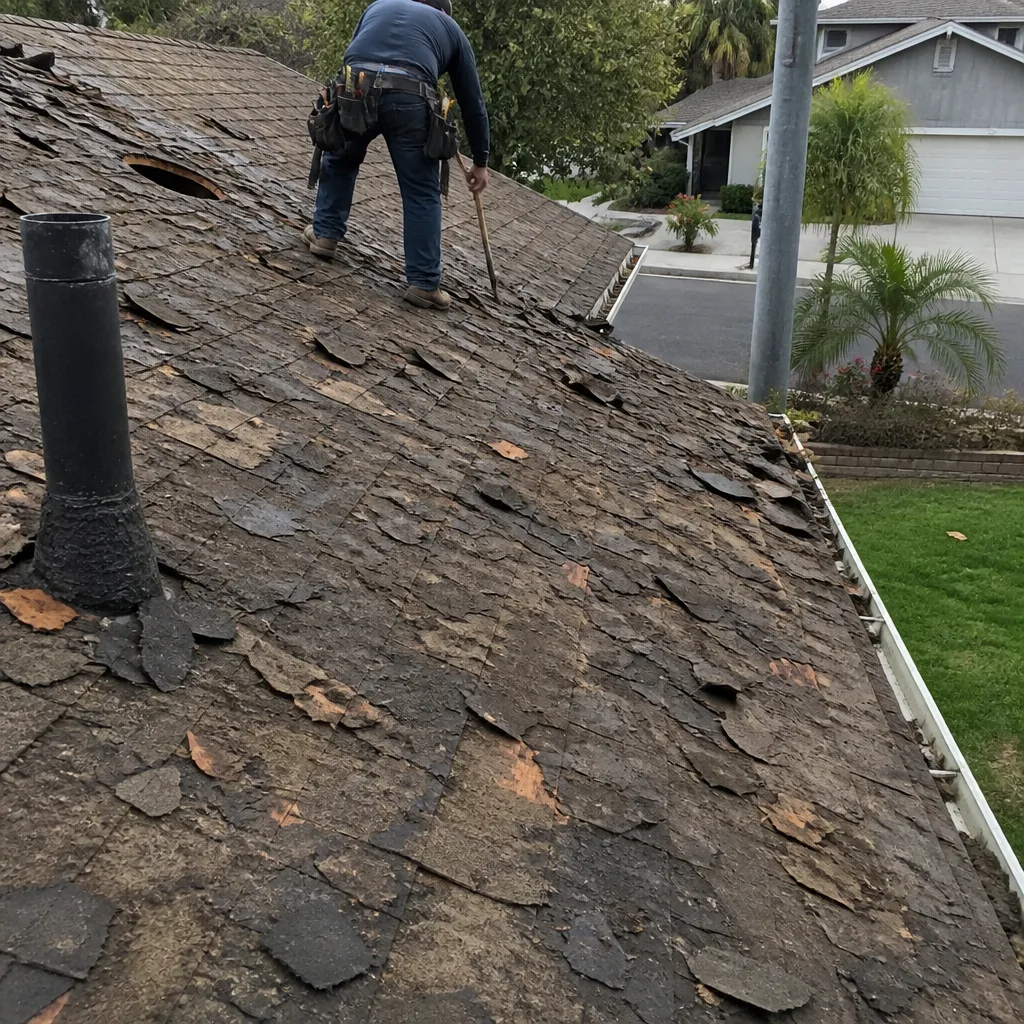 Before
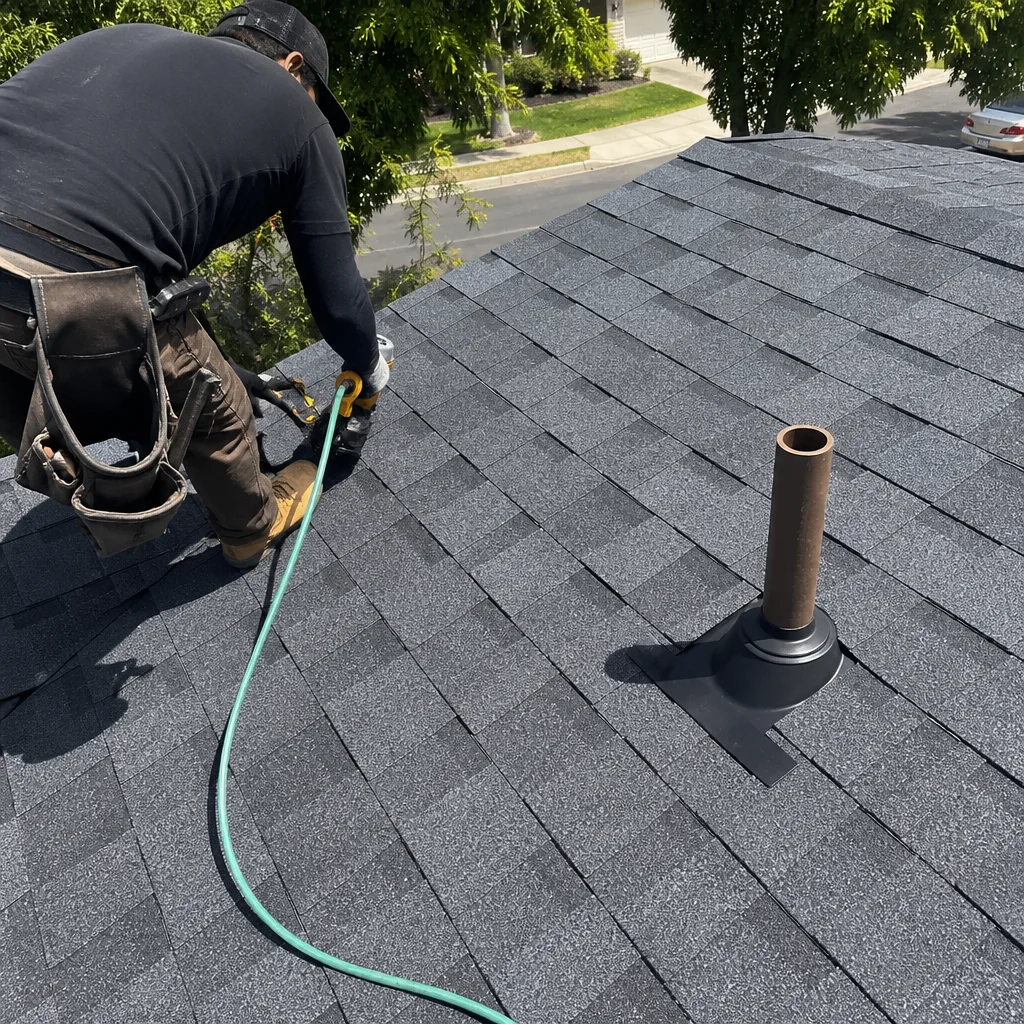 After
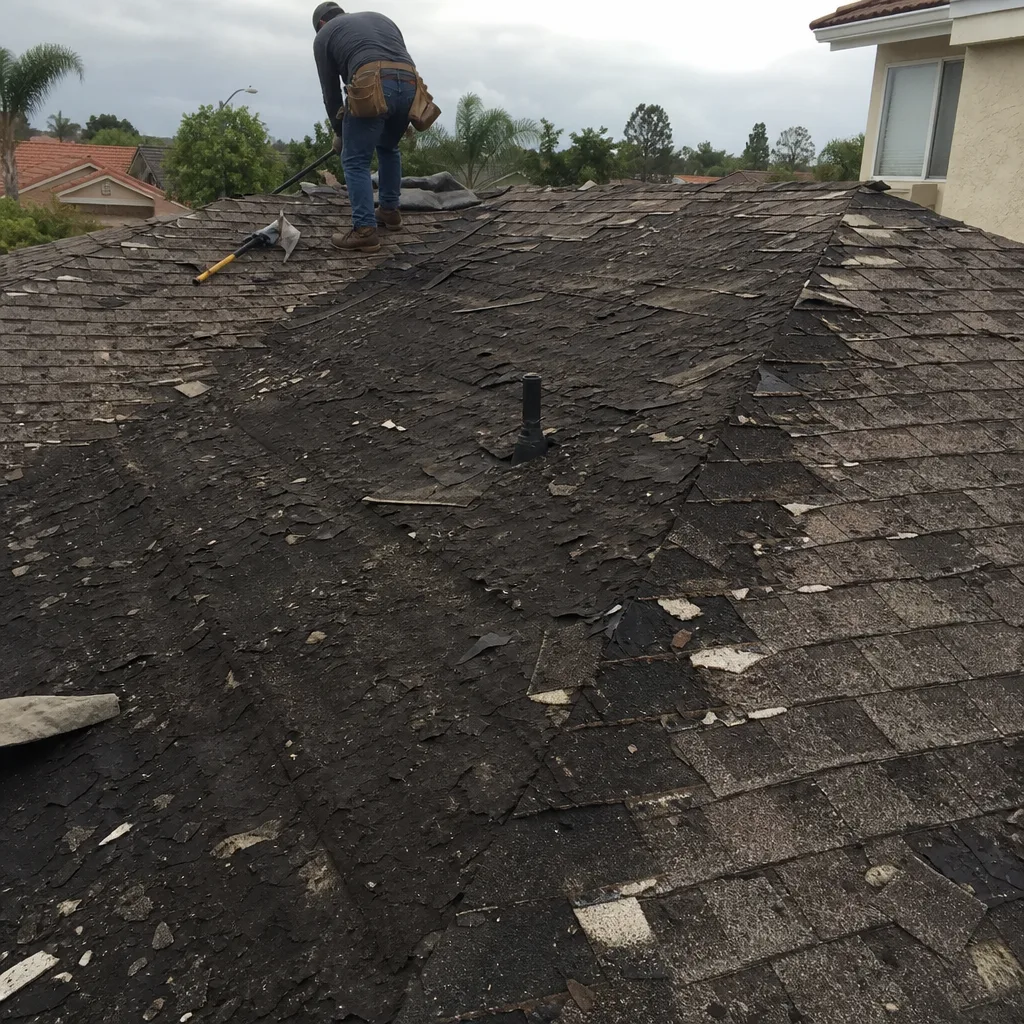 Before
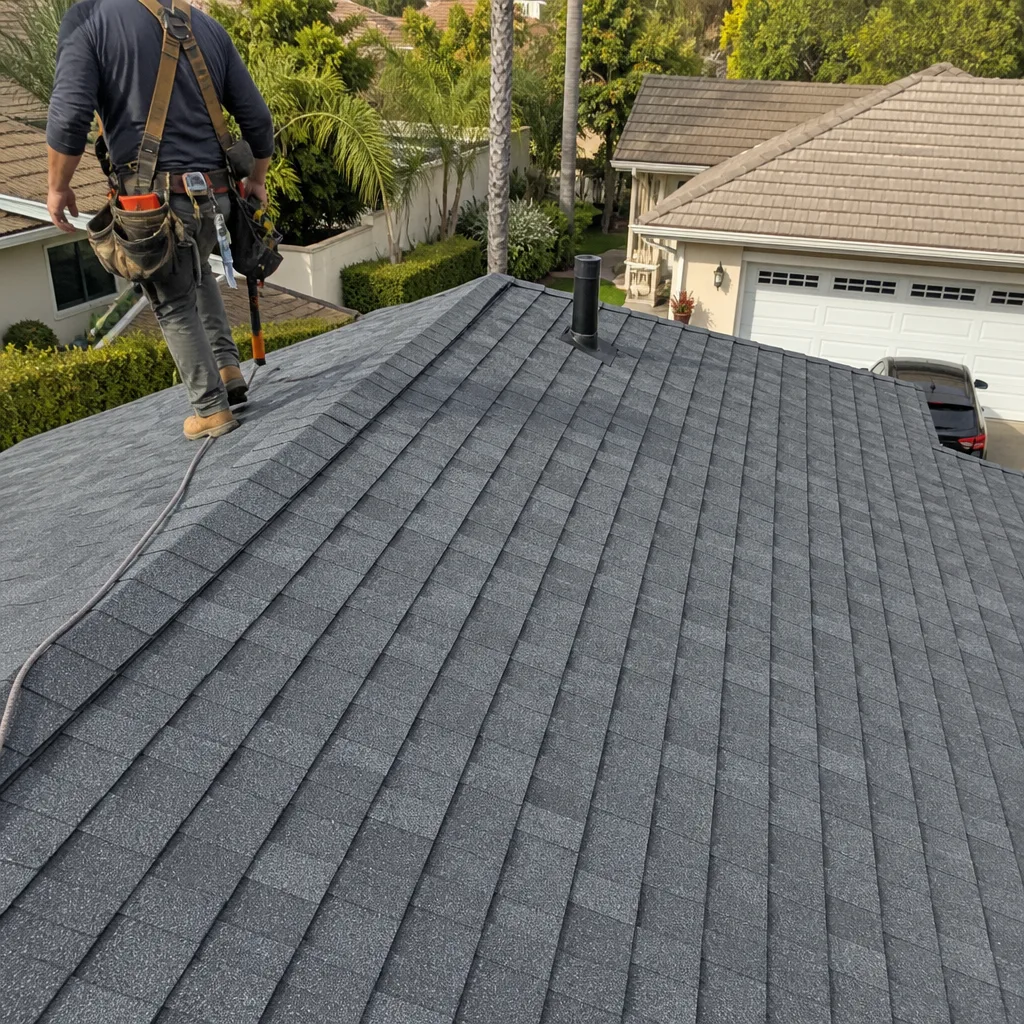 After
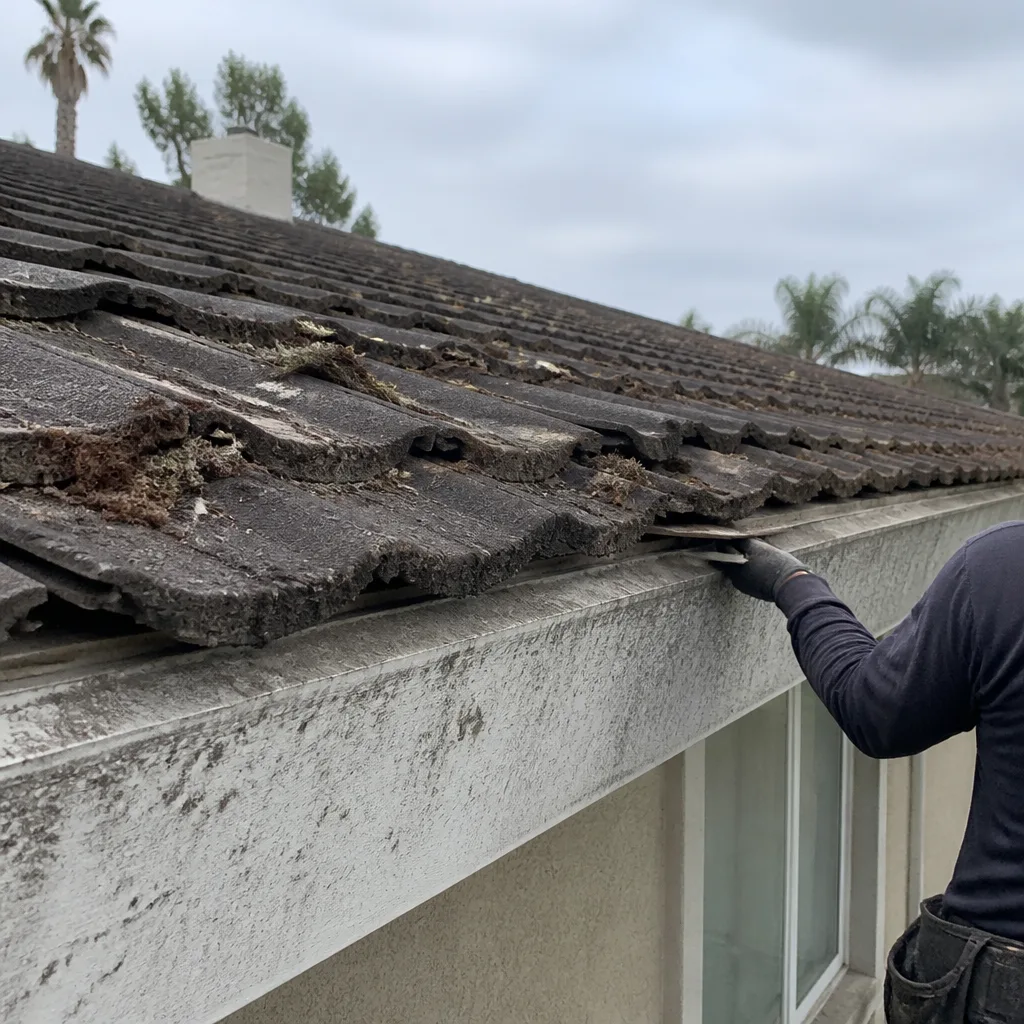 Before
 After
Common Roof Replacement Problems We See in San Joaquin Hills Homes
- Discontinued Boral tile profiles holding up HOA approval. Communities built in the late 1980s and early 1990s often used tile profiles that Boral stopped producing years ago. Without a pre-identified match, the architectural review stalls, the permit sits, and the project loses two to three months.
- Santa Ana wind damage on windward slopes above Laguna Canyon. Ridge caps and tile edges on the canyon-facing pitches take repeated gusts every fall. Poorly nailed caps lift, water gets underneath, and by the time you see a stain on the ceiling, the decking has been wet for months.
- Tight lots forcing hand-carry staging. Many San Joaquin Hills streets have narrow drives, fire-lane restrictions, or HOA rules against on-street staging. Every square of tile hand-carried up a slope adds labor hours to the job. We plan the staging layout during the estimate, not on day one.
- Marine-layer moss on north-facing slopes hiding deck rot. Morning moisture that rolls in off the coast leaves north-facing tile damp for hours each day. Moss takes hold, lifts tile edges, and the decking beneath rots long before it’s visible from the ground. We typically find deck replacement on at least one section of every reroof here.
Pricing for Roof Replacement in San Joaquin Hills, CA
Here are the ranges we quote most often in San Joaquin Hills. Full clay tile reroof on a 3,500 square foot two-story: $28,000 to $48,000. Architectural asphalt shingle replacement on the same footprint: $16,000 to $26,000. Flat roof section replacement: $6,000 to $14,000. Roof decking replacement, when rot is found: $4 to $7 per square foot of affected area. HOA tile match documentation and sample board preparation: $300 to $600, credited back if we do the job. Every estimate includes a written line item for staging, hand-carry labor, and cranes where needed. We don’t give a number that changes once the roof is open. Call (855) 707-6114 for a fixed quote.
We Also Serve Cities Near San Joaquin Hills
Our Roof Replacement crews work throughout the coastal hills, including Aliso Viejo, Newport Beach, Laguna Beach, and Irvine. If you’re in San Joaquin Hills proper or just outside the HOA boundaries, the same team and the same material matching process applies.
Serving San Joaquin Hills, CA — Our Local Coverage Area
We’re based in the San Joaquin Hills area and know this community well. Use the map below to see our service coverage — if you’re nearby, we can almost certainly help.
FAQs About Roof Replacement in San Joaquin Hills
The HOA review typically adds four to eight weeks to your timeline, and in communities like The Summit or Tiburon, it can stretch longer if the original tile profile is discontinued and no match has been pre-identified. We start with the physical match trial first, submit documentation with your application, and often cut the review cycle down to two or three weeks because the committee isn’t waiting on missing material specs. Call (855) 707-6114 and we’ll tell you exactly what your specific HOA requires.
Yes, we stage materials within your property lines, but on tight San Joaquin Hills lots that usually means your driveway and side yard, not the street. We use narrow boom trucks and hand-carry tile up slopes where a standard truck can’t reach. We also coordinate with neighbors when a lift or crane has to sit on a shared access easement, and we file the notice your HOA requires before equipment arrives.
Class A fire-rated materials are the baseline requirement, and in San Joaquin Hills that includes clay tile, concrete tile, and fire-rated composite shingles or synthetic slate. We recommend ember-resistant ridge and soffit venting, plus a fire-rated underlayment, on every reroof here. The wildland-urban interface isn’t theoretical on these ridgeline lots, and the HOA will often require documentation that your material choice meets the local fire code.
We work within the hours your HOA and the city of Newport Beach allow, typically 8 a.m. to 5 p.m. on weekdays, with no pneumatic work on Sundays. For homes with shared walls or close neighbors, we post the tear-off and re-nail schedule in advance and keep the loudest work to the middle of the day. If your community has stricter rules, we’ll confirm them before the first truck arrives.
Expect decking repair. Roofs from the late 1980s and early 1990s in San Joaquin Hills have been through 30-plus years of Santa Ana cycles and marine-layer moisture, and we rarely open one without finding rotted plywood or soft spots at the valleys and eave edges. You should also expect to address the underlayment, which on those original roofs is often degraded to the point where it’s no longer shedding water properly.
Written by Nolan Brewster, Owner at Briarwood Roof Repair, serving San Joaquin Hills and surrounding Orange County communities.