
Last updated October 30, 2026
 Architectural shingles
 Metal roofing
 Tile roofing
 GAF
 Owens Corning
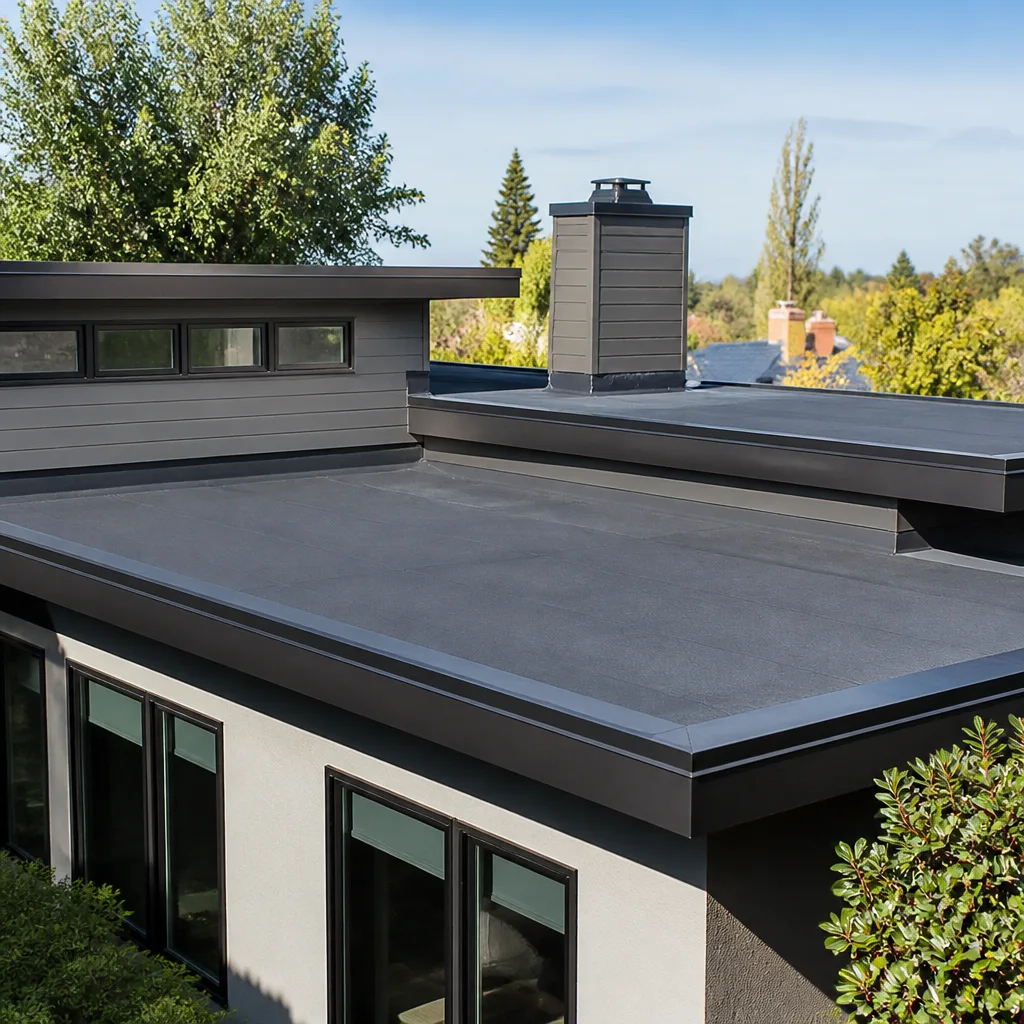 Flat & low-slope
Free roof inspection with deck photos before we talk money - GAF and Owens Corning certified installation
Roof Repair Maintenance Checklist for Mission Viejo Homeowners
The costliest roof repairs in Mission Viejo don’t start with a storm. They start with a clogged valley flashing that goes unnoticed for two dry seasons and silently rots the decking beneath. By the time the first water stain appears on a ceiling, the repair is no longer a $400 patch job, it’s a $4,000 decking replacement. This guide gives you a maintenance checklist built specifically for Mission Viejo’s actual roof killers: Santa Ana wind events, marine layer moisture cycles, brush fire ember exposure, and intense UV degradation on south-facing slopes. Skip the generic Midwest advice about ice dams and snow load. None of that applies here, and following it means you’re ignoring the real threats to your roof.
Styles & brands we work with
Quick Answer
A Mission Viejo roof maintenance checklist should be organized around four seasonal tasks: clearing debris from valleys and scuppers before Santa Ana season, checking granule loss and algae on north-facing slopes each spring, inspecting ridge cap shingles for wind lift after every major wind event, and maintaining defensible space from ember cast if you live near Aliso and Wood Canyons Wilderness Park. Homeowners should perform a ground-level visual inspection quarterly and schedule a professional roof inspection every two to three years. The free estimate and inspection services at Briarwood Roof Repair home are available whenever you find something concerning.
Table of Contents
- The Mission Viejo Seasonal Maintenance Calendar
- Santa Ana Wind Inspections: Ridge Cap and Edge Lifting
- How the Marine Layer Affects Shingle Health
- Ember Cast Exposure for Homes Near Aliso and Wood Canyons
- UV Degradation on South-Facing Slopes
- Warranty Maintenance Requirements by Manufacturer
- DIY Inspection Sequence for Mission Viejo Homes
- Common Mistakes to Avoid
- When to Call a Professional
- Frequently Asked Questions
- The Bottom Line
The Mission Viejo Seasonal Maintenance Calendar
Mission Viejo doesn’t have four seasons in the traditional sense. We have two wet months, three windy months, and seven months of dry heat interrupted by morning fog. Your maintenance calendar needs to reflect that reality. Here’s what we’ve learned from years of repairing roofs across Mission Viejo, from Lake Mission Viejo neighborhoods to the hillsides above Crown Valley.
January through March: The Wet Season Window
This is when Mission Viejo actually gets rain, and it’s the worst possible time to discover a leak. Before the first significant storm, walk the perimeter of your home and check every downspout outlet. Make sure water is flowing freely away from the foundation. Clogged gutters in the January rains back water up under the first course of shingles, and that’s a repair no one wants to make in a downpour.
- Clear all gutters and downspouts before the first major rain.
- Check attic ventilation after heavy rain: look for condensation on the underside of the roof deck.
- Inspect ceiling corners in upstairs rooms for the earliest signs of water intrusion.
- After each storm, do a ground-level check for shingle tabs on the ground or in planter beds.
April through June: Post-Rain Assessment
Once the rains stop, you have a narrow window to assess the damage before summer heat sets in. April and May mornings are cool enough to check the roof safely from a ladder or with binoculars. Look for shingles that lifted during winter storms and never settled back down. The adhesive strip on a shingle seals when temperatures reach about 70 degrees, so if you see lifted tabs in April, they’re not going to self-heal. That’s the time to schedule roof repair in Mission Viejo before the summer sun bakes the exposed underlayment.
July through September: Heat and UV Stress
Summer in Mission Viejo is a slow bake. Roof surface temperatures on south-facing slopes regularly hit 160 degrees or more. This is when existing problems accelerate. Hairline cracks become full splits. Old sealant around pipe boots turns brittle and separates. You should be checking for:
- Cracked pipe boot flashing around plumbing vents.
- Dried-out caulking around skylights and chimney flashings.
- Blisters on shingles that face direct afternoon sun.
- Granule accumulation in gutters, which is normal but tells you which slope is shedding fastest.
October through December: Pre-Santa Ana Preparation
October is the most important month on the Mission Viejo roof calendar. The Santa Ana winds arrive with little warning and routinely gust over 50 mph in foothill neighborhoods. Before wind season, clear every valley of leaves and debris. Mission Viejo’s eucalyptus trees drop bark and leaves that slide into roof valleys and create dams, and that’s exactly how the silent decking rot problem starts. We’ll cover the full wind checklist in the next section.
Santa Ana Wind Inspections: Ridge Cap and Edge Lifting
Santa Ana winds hit Mission Viejo from the northeast, which means your roof’s northeast-facing edges and ridge line take the brunt of the force. Wind doesn’t flatten shingles, it gets underneath them and peels them back from the edges. The first shingles to fail are almost always at the rake edges (the sloped sides of the roof) and along the ridge cap. In our experience repairing wind damage across Mission Viejo, we’ve found that homes on ridgelines and in the canyons west of the 5 freeway see significantly more lift damage than homes in the flatlands.
What to Look For from the Ground
You don’t need to get on the roof to perform a solid Santa Ana wind inspection. A pair of 10x binoculars from your yard or the street will reveal most problems. Here’s the sequence we recommend:
- Ridge cap first. The ridge cap is the row of shingles running along the peak of your roof. Look for any cap shingle that appears lifted, cracked, or missing. Wind gets under the cap at the gable end first, so pay special attention to the ends.
- Rake edges second. The rake edge is the sloped edge of your roof that runs from the eave to the peak. Look for any shingle tab that appears bent upward or separated from the shingle beneath it.
- Hip lines third. If your home has a hip roof (slopes on all four sides), check the hip ridges where two slopes meet. These are high-wind exposure points.
- Field shingles last. After a major wind event, scan the broad sections of roof for any shingle that looks misaligned, darkened, or out of position.
After any Santa Ana event with gusts over 40 mph, do this inspection. If you see lifted shingles, they’re not going to settle back down. The asphalt adhesive strip that holds the shingle tab down has already released, and once released, it doesn’t re-bond. Every subsequent wind event will lift that shingle higher until it tears off entirely, exposing the underlayment and, eventually, the decking.
How the Marine Layer Affects Shingle Health
Mission Viejo sits close enough to the coast to get regular marine layer intrusion, especially from May through August. That overnight fog rolls through the valleys and burns off by mid-morning, creating a daily moisture cycle that accelerates two specific problems: granule loss and algae growth. Homes in the lower elevations of Mission Viejo, particularly near Oso Creek and the areas west of Marguerite Parkway, see more marine layer days than hillside homes.
The Granule Loss Test
Granules are the crushed stone embedded in the surface of asphalt shingles. They protect the asphalt from UV radiation, which is the single biggest accelerator of shingle aging. When granules come off, the asphalt is exposed and begins to dry out, crack, and fail. The marine layer accelerates granule loss because the daily wet-dry cycle causes shingles to expand and contract. Over time, that thermal cycling loosens the bond between the granules and the asphalt.
Here’s the test: after a week of marine layer mornings, check your gutters. Catch the water from a downspout in a bucket during a morning fog burn-off, or simply inspect the gutter troughs. You’ll see a fine dusting of granules. Some granule loss is normal, especially during the first two years after installation. What you’re watching for is an acceleration: if the granule accumulation increases noticeably from one season to the next, or if you start seeing bare asphalt patches on the shingles themselves, that’s a roof approaching the end of its functional life.
Algae Growth on North-Facing Slopes
The dark staining you see on north-facing and shaded roof slopes isn’t just cosmetic. It’s a cyanobacteria called Gloeocapsa magma, and it feeds on the limestone in shingle granules. Left untreated, algae holds moisture against the shingle surface, accelerating granule loss and shortening shingle life. In Mission Viejo, north-facing slopes under tree canopy are the highest-risk zones. We see it consistently on homes in the tree-lined neighborhoods around Lake Mission Viejo and throughout the older sections of the city where mature landscaping shades portions of the roof.
If you catch algae early, treatment is straightforward. A cleaning solution applied to the affected slope kills the algae without damaging the shingles. If you let it go for several years, the staining becomes embedded and the shingles often need replacement, not just cleaning. The best time to check for algae in Mission Viejo is early spring, right after the marine layer season ends but before the summer heat accelerates any existing growth.
Ember Cast Exposure for Homes Near Aliso and Wood Canyons
If you live anywhere near Aliso and Wood Canyons Wilderness Park, or in the foothill communities on the eastern edge of Mission Viejo, ember cast is a legitimate threat that most maintenance checklists ignore. Wildfire embers don’t land on your roof and ignite it directly in most cases. They land in your gutters, in the debris on your roof, in the gaps at the eaves, and in the vegetation touching your roofline. The roof’s job is to keep embers from getting a foothold.
Here’s the ember-cast checklist for Mission Viejo homes in the wildland-urban interface:
- Keep gutters clear year-round. In a fire event, dry leaves and debris in gutters are the first ignition point. After a Santa Ana wind event, gutters fill with leaves, and that’s exactly when fire risk is highest.
- Inspect gaps at the roof edge. Embers get blown under the eave and into the attic through gaps in the drip edge. Walk the perimeter of your home and look for any gap where you can see daylight between the roof deck and the fascia board.
- Check the bird stop and eave closures. If your home has a tile roof, gaps at the eave where the tile meets the underlayment are ember entry points. These gaps are part of normal tile roof construction, but the bird stop material degrades over time and needs replacement.
- Remove vegetation within five feet of the roof edge. In Mission Viejo’s foothill neighborhoods, trellises, vines, and tall shrubs against the roofline are fuel ladders. Keep them clear.
If your roof is older, particularly if you have a composition shingle roof that’s 15 years or older, consider the condition of the underlayment. We’ve seen ember damage on Mission Viejo homes that was contained to the gutter zone, and we’ve seen embers find their way under lifted shingles and smolder in the roof deck for hours. That’s the scenario that burns a house down. When we perform roof inspections in Mission Viejo for homes in the canyon-adjacent zones, ember entry points are always part of the assessment.
UV Degradation on South-Facing Slopes
Mission Viejo gets roughly 280 days of sunshine per year, and your roof’s south-facing slope absorbs the brunt of it. UV radiation breaks down asphalt shingles at the molecular level, causing the asphalt to become brittle and the shingle to shrink and crack. On a roof with a single south-facing slope, that section will fail three to five years before the rest of the roof. That’s not a guess, it’s a pattern we see repeatedly on homes throughout Mission Viejo.
What UV Damage Looks Like
- Shrinkage cracks: Thin cracks that run perpendicular to the shingle edge. Shingles literally shrink as the asphalt dries out and pulls back from the edges.
- Curling at the corners: The heat causes the shingle to curl up at the corners, which exposes the underlayment and creates wind-lift points.
- Bare asphalt patches: Granules are completely gone, leaving the black asphalt substrate visible. This is the earliest failure point.
- Color differences: The south slope will look noticeably lighter or faded compared to north-facing slopes.
The reality for Mission Viejo homeowners is that a roof with 10 more years of useful life on the north slope may have only two or three years left on the south slope. When that happens, you have a decision to make. A full replacement is one option. A strategic Roof Repair services approach for the failing slope using matched materials is another, and that’s where brand-matched repair matters. If your roof is GAF on the south slope, the repair should be GAF, not whatever shingle happens to be on the truck. That’s how you preserve both the appearance and the warranty.
During your quarterly inspections, always compare the south slope to the north slope. When the difference becomes obvious from the ground, it’s time for an assessment from someone who can tell you how much life is actually left in each section.
Warranty Maintenance Requirements by Manufacturer
Here’s something most Mission Viejo homeowners don’t realize: your shingle warranty has maintenance requirements, and failing to meet them can void your coverage. Every major manufacturer publishes maintenance guidelines, and while the details vary, the theme is consistent: you have to inspect and maintain your roof, and you have to document it. We work with roofs from seven major manufacturers, and the warranty language is remarkably similar across all of them.
What GAF Requires
GAF’s warranty language requires “reasonable and necessary maintenance” and specifically calls out the need to keep the roof clear of debris, keep gutters functioning, and address problems promptly. GAF also requires that any repairs be performed with GAF products by a GAF-certified contractor if you want the repair covered under the warranty. A repair performed with another manufacturer’s shingle voids coverage on the entire roof area affected.
What CertainTeed Requires
CertainTeed’s warranty is similarly structured. The warranty remains valid only if the roof is maintained according to standard roofing practice, which includes regular visual inspections and prompt repair of identified problems. CertainTeed also requires that the homeowner keep records of inspections and maintenance. If you’ve never documented a roof inspection, you’re technically out of compliance.
What Owens Corning Requires
Owens Corning places particular emphasis on ventilation. Their warranty language ties a significant portion of their coverage to proper attic ventilation, because inadequate ventilation traps heat and moisture in the attic, which cooks the shingles from beneath and accelerates failure. If your Mission Viejo home has an attic that doesn’t meet Owens Corning’s ventilation standards, your warranty claim can be denied.
The practical takeaway for Mission Viejo homeowners: don’t install a roof and forget about it. Keep a simple maintenance log. Note the date of each inspection, what you observed, and any repairs made. If you ever need to file a warranty claim, that log is your proof that you held up your end of the agreement. When we do roof replacement in Mission Viejo, we walk our customers through the maintenance requirements specific to their chosen brand, because the last thing anyone wants is a warranty denial on a technicality.
DIY Inspection Sequence for Mission Viejo Homes
You should perform a complete roof inspection four times a year, aligned with the seasonal calendar above. Most of it happens from the ground. Here’s the complete sequence we recommend for Mission Viejo homeowners who want to stay ahead of problems:
- Walk the full perimeter. Look for shingle tabs, tile pieces, or granules on the ground. Look for nail pops on the roof surface. Look for any sagging in the roof line that wasn’t there before.
- Check the gutter line. Clean gutters are the foundation of roof health in Mission Viejo. Remove debris, check downspout flow, and note any granule accumulation.
- Binocular pass of the ridge and hips. From two or three vantage points, examine the ridge cap and hip lines for lifted, cracked, or missing pieces.
- Binocular pass of the slopes. North slope first (morning light is best), then south slope. Compare them for color differences, bare patches, curling, or cracks.
- Check all flashings. Pipe boots, chimney flashing, skylight frames, and valley metal. Look for separated sealant, rust, or gaps.
- Inspect from inside. In the attic, check the underside of the roof deck for water stains, especially near penetrations and valleys. Check for daylight visible through any gaps.
- Review your maintenance log. Compare what you see now with what you noted last quarter. The trend is the signal.
If any step of this sequence reveals something you’re not sure about, check our Roof Repair Troubleshooting: Common Problems and How to Fix Them or mark it down and have it looked at. The cost of a professional assessment is always less than the cost of ignoring a problem for another season.
Common Mistakes to Avoid
- Skipping the post-Santa Ana check. Wind damage is progressive. A slightly lifted shingle becomes a torn-off shingle in the next wind event. The fix is cheap if you catch it early and expensive if you don’t.
- Painting over algae. Some homeowners try to cover algae stains with roof paint or sealant. This traps moisture and accelerates shingle failure. Clean the algae, don’t cover it.
- Ignoring granule loss. Granules in the gutter are the earliest warning sign that a roof is aging. Most Mission Viejo homeowners don’t notice until the bare patches appear, and by then the shingle is already compromised.
- Using a pressure washer on shingles. Pressure washing strips granules and voids most manufacturer warranties. There’s never a reason to pressure wash an asphalt shingle roof.
- Waiting for a leak to appear. By the time water comes through the ceiling, the decking has been wet for weeks or months. The interior repair is usually three to four times the cost of the roof repair that would have prevented it.
- Mixing brands on repairs. If your roof is CertainTeed, the repair needs to be CertainTeed. A mismatched repair voids the warranty and creates an obvious patch that hurts resale value.
- Skipping the attic check. Half of the information about your roof’s health is visible from inside the attic. The ground-level inspection only tells you about the surface.
When to Call a Professional
Some things are clear DIY territory: clearing gutters, trimming nearby branches, doing a ground-level visual pass. Some things are not. If you see lifted ridge cap shingles after a wind event, call someone who does this every day. If you find water stains in the attic, call someone. If your roof is more than 15 years old and you’ve never had a professional inspection, call someone. The stakes are too high, and roof work is genuinely dangerous. Falls from roofs account for a significant portion of residential construction fatalities every year. Nobody should be climbing onto a two-story Mission Viejo home without proper equipment and experience. The roof repair team at Briarwood works with the brand already on your roof, and we’re happy to assess what you’ve found. Estimates are free. Call (855) 707-6114.
Frequently Asked Questions
Basic DIY maintenance costs almost nothing beyond your time and modest supplies. A professional roof inspection in Mission Viejo typically runs $200 to $400 depending on the roof’s complexity and accessibility. If issues are found, repairs range from a few hundred dollars for minor flashing adjustments to several thousand for significant decking replacement. Annual gutter cleaning runs $150 to $300. A maintenance approach that includes quarterly visual checks and a professional inspection every two to three years is the most cost-effective strategy; see our Roofing Cost Breakdown: The Mission Viejo Homeowner’s Reference for 2026 for detailed pricing. Call (855) 707-6114 for an exact quote, estimates are free.
Snow and ice are not a concern in Mission Viejo. The city sits at elevations between 200 and 1,000 feet, and snowfall is essentially nonexistent. Your roof’s actual threats are Santa Ana wind gusts, marine layer moisture cycles, UV exposure, and ember cast if you’re near wildland areas. A checklist built around those four factors will serve you better than any generic four-season maintenance guide.
Mission Viejo homeowners should have a professional roof inspection every two to three years, with more frequent checks after major wind events or if the roof is more than 15 years old. Between inspections, do your own ground-level visual checks quarterly and after every Santa Ana event with gusts over 40 mph. If you live near Aliso and Wood Canyons Wilderness Park, add an ember-cast inspection to your fall routine. Call (855) 707-6114 to schedule an inspection, estimates are free.
The biggest Mission Viejo-specific roofing problem is accelerated UV degradation on south-facing slopes. With roughly 280 sunny days per year, a south slope will fail three to five years before the rest of the roof. We see this pattern consistently across the city, especially on homes built in the 1980s and 1990s that are on their first or second roof. The fix starts with recognizing the early warning signs: color fade, granule loss, and curling at shingle corners.
Small things like clearing gutters and trimming branches are fine for homeowners. Any repair that involves ladder work, roof walking, or flashing replacement should be left to professionals. Mission Viejo homes are predominantly two-story, which makes a fall from the roofline a serious injury risk. Beyond safety, DIY repairs often void manufacturer warranties. If your roof is under warranty, check the terms before attempting any repair. When in doubt, call a professional for an assessment.
Insurance covers sudden, accidental damage, not wear and tear. If a Santa Ana wind event tears shingles off your roof, that’s typically covered. If your roof fails because of deferred maintenance, aging, or granule loss, that’s on you. This is exactly why consistent maintenance matters financially: the homeowner who can demonstrate regular inspection and prompt repair is in a much stronger position when filing a claim for storm damage.
The Bottom Line
Mission Viejo roofs fail from four specific causes: Santa Ana wind lift on ridges and edges, marine layer moisture cycles that accelerate granule loss and algae growth, ember exposure for homes near the canyons, and UV degradation that ages south-facing slopes years ahead of the rest of the roof. A maintenance checklist built around those realities will save you more money than any generic maintenance plan. Check your roof quarterly from the ground, after every major wind event, and have a professional assessment every two to three years. Repair first, replace only when necessary. Keep a maintenance log for warranty purposes, and when work is needed, use materials that match the brand already on your roof. Seven brands, one team, and a maintenance plan that actually fits Mission Viejo.
Written by the team at Briarwood Roof Repair, serving Mission Viejo since 2014.
See the difference
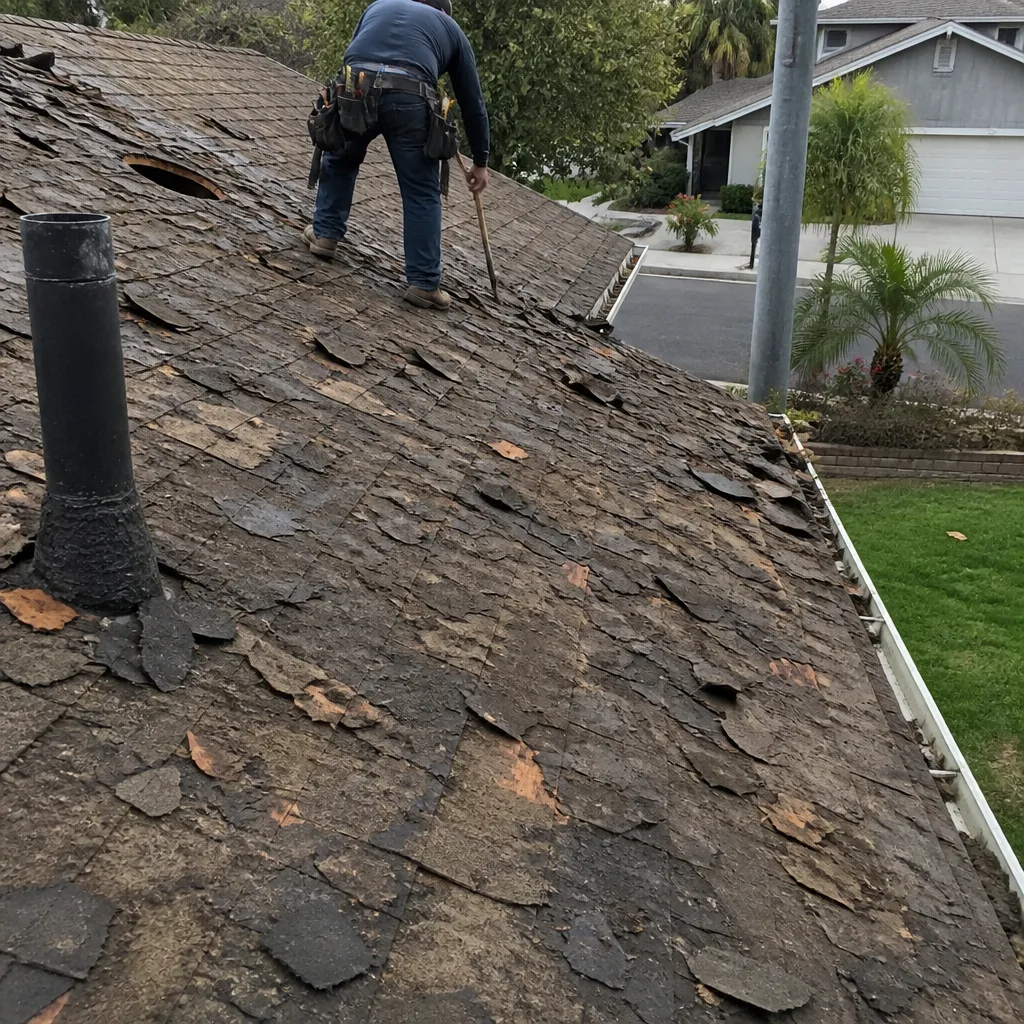 Before
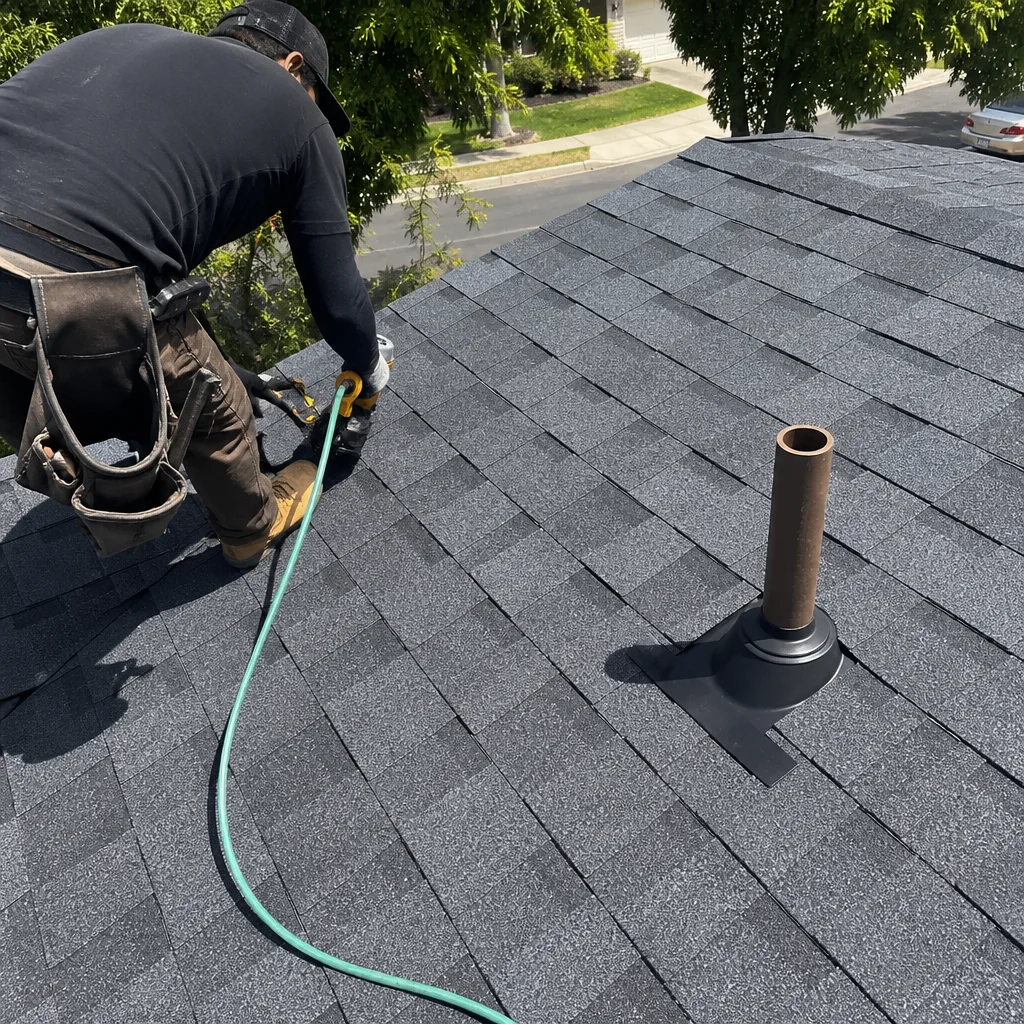 After
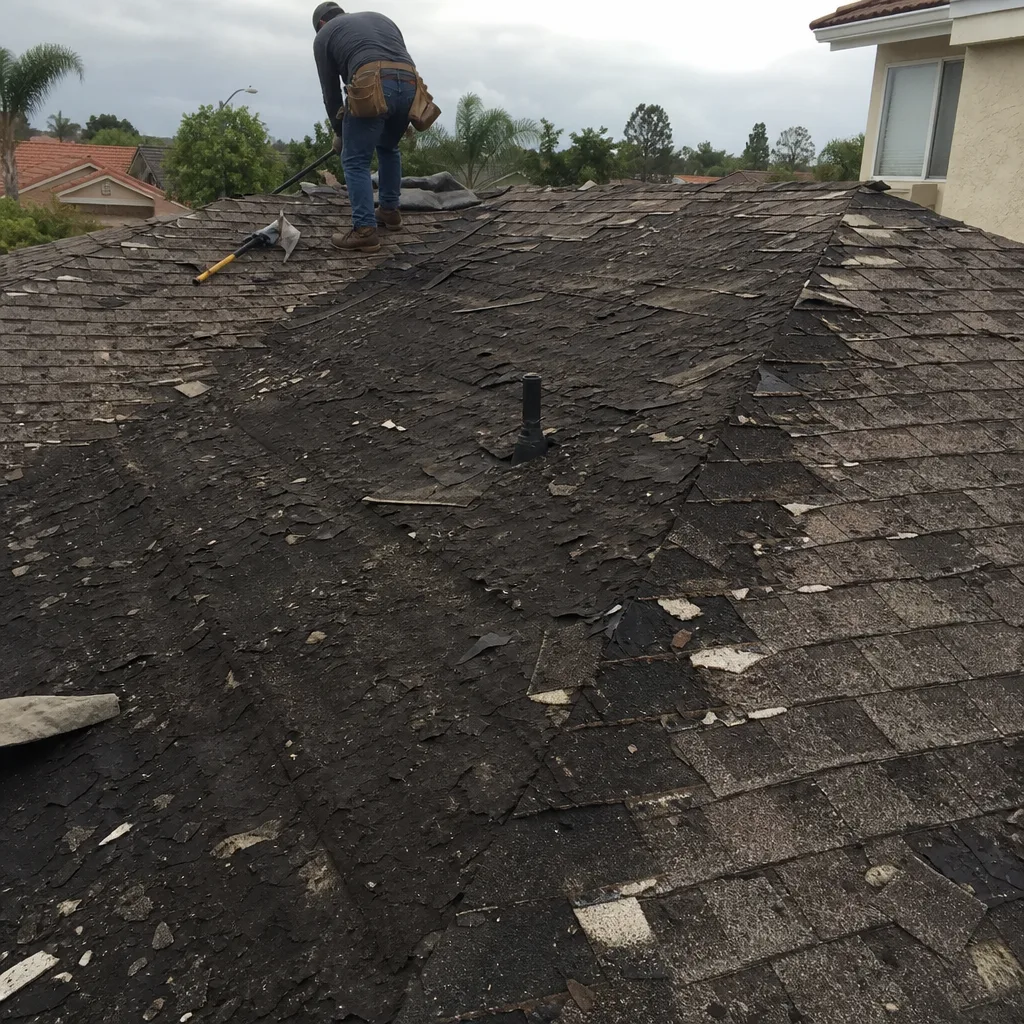 Before
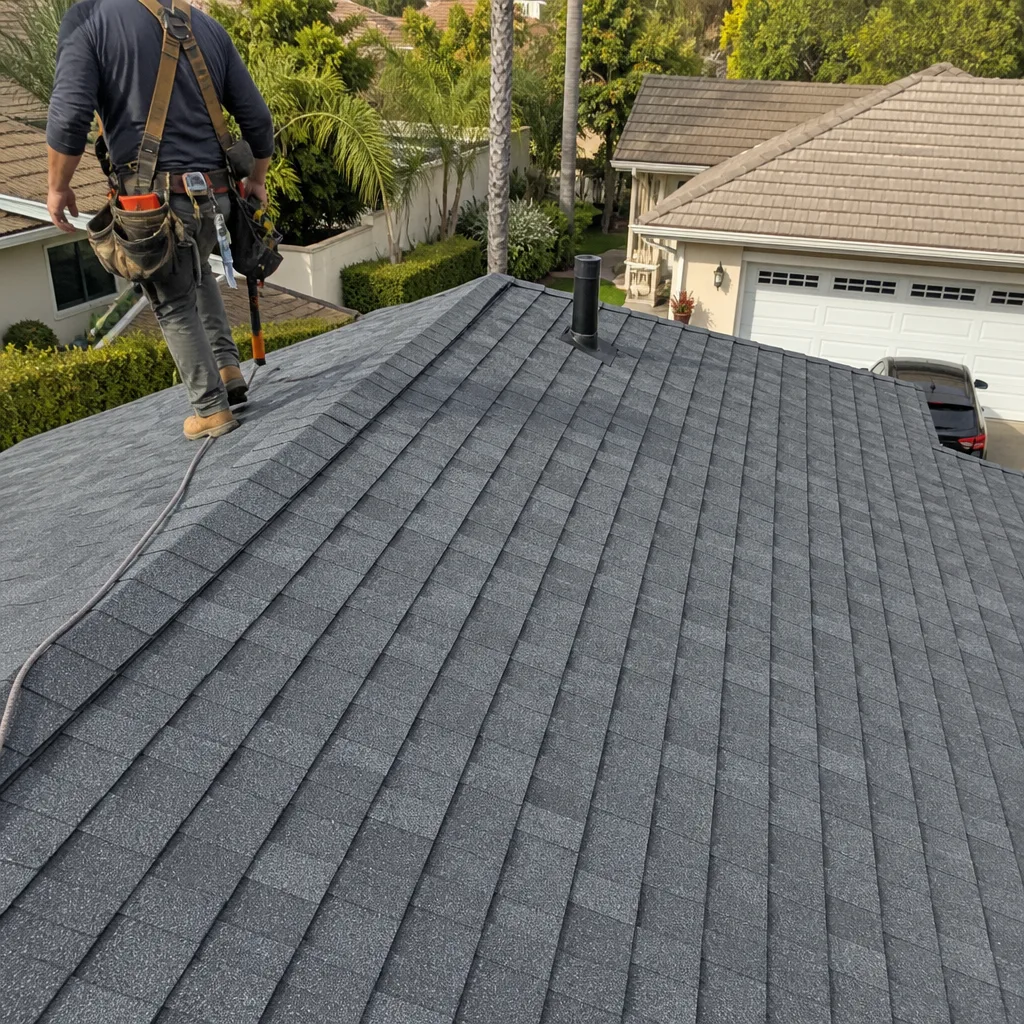 After
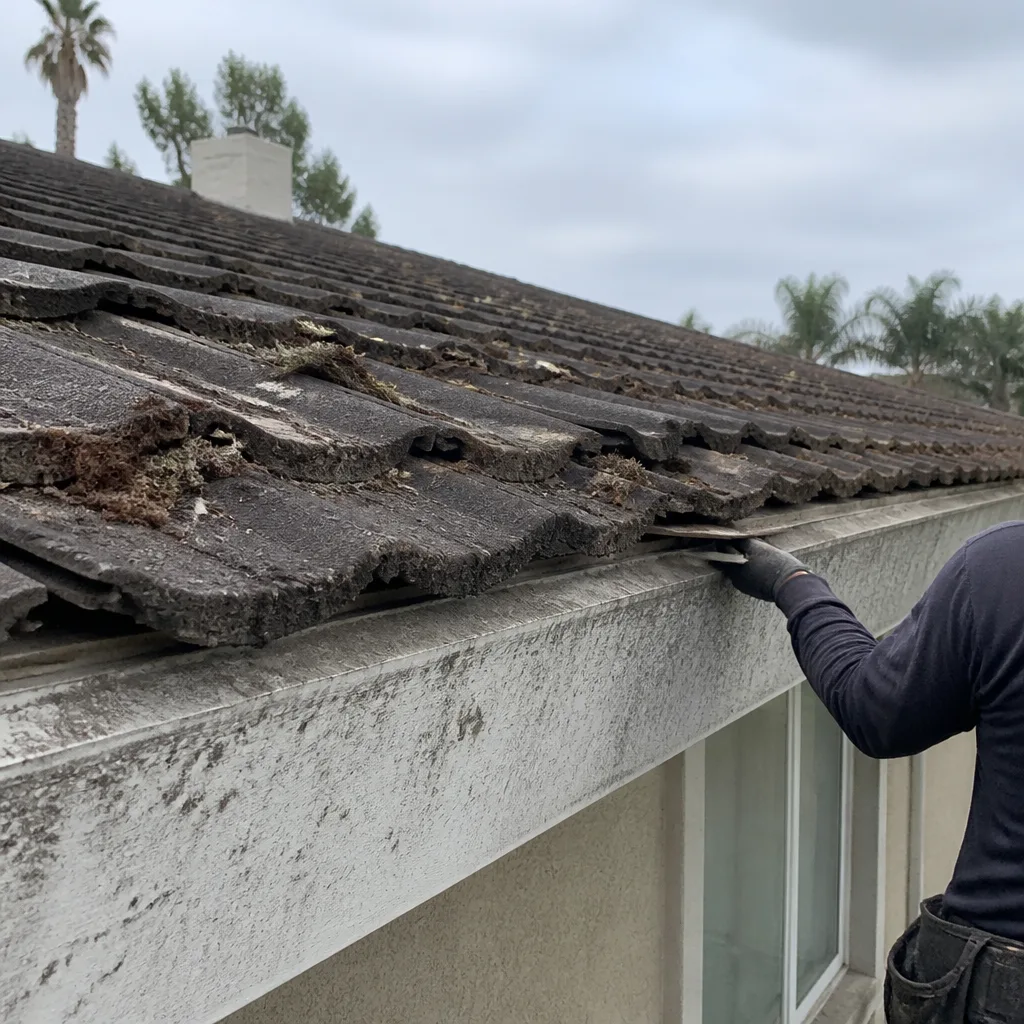 Before
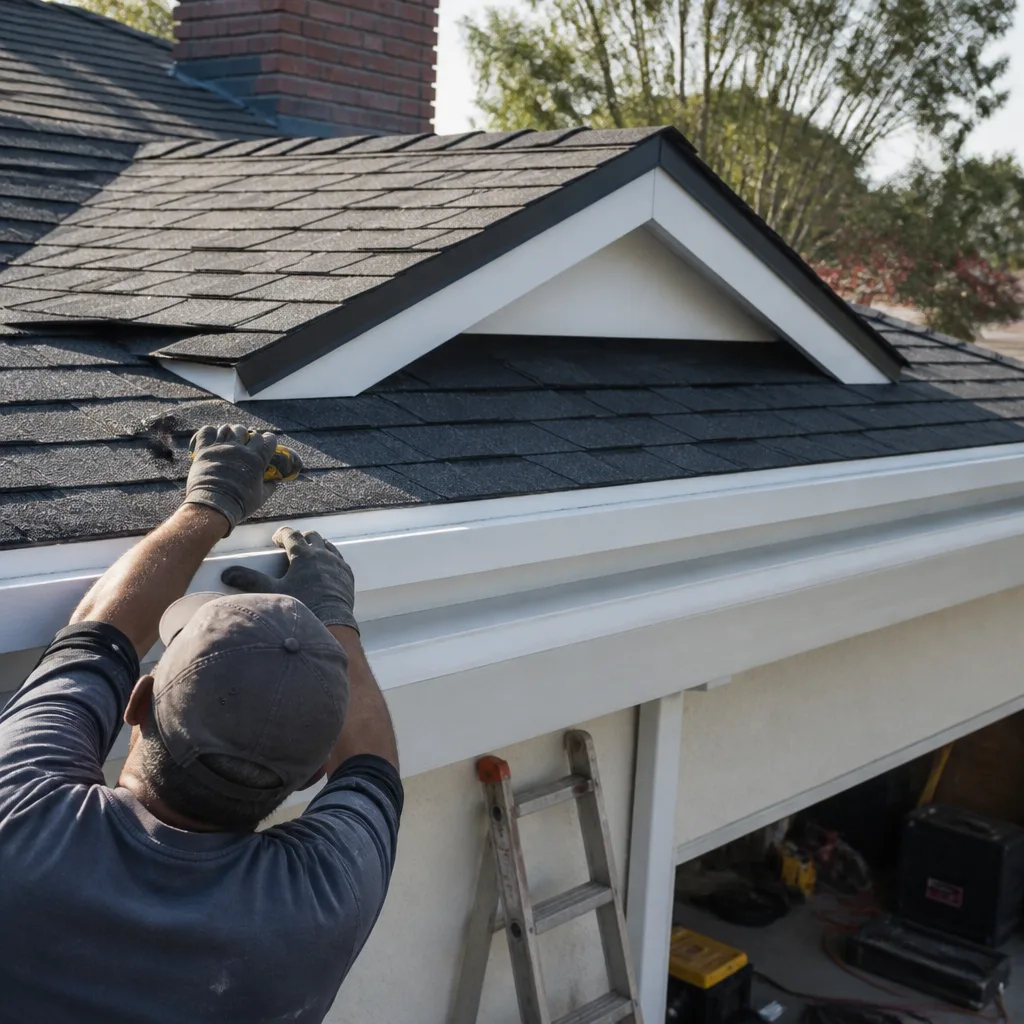 After