
Last updated October 30, 2026
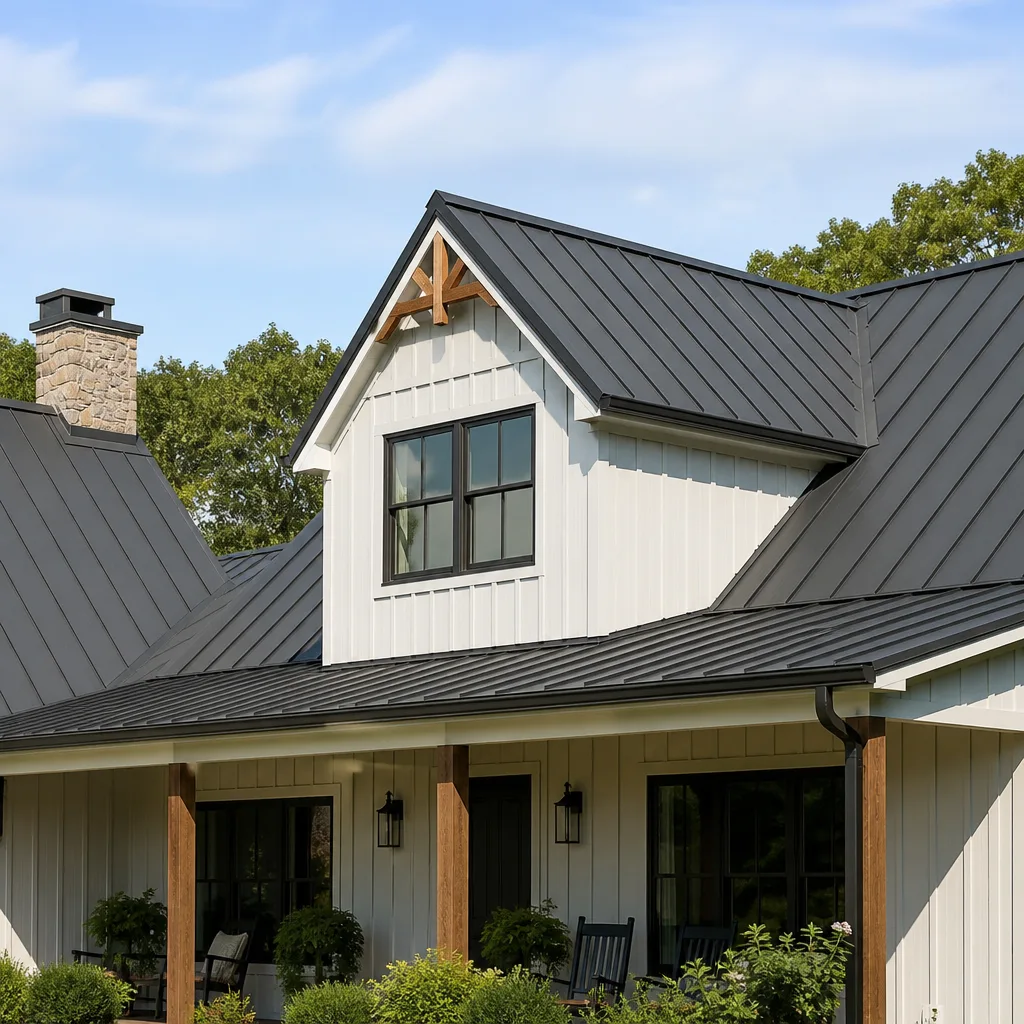 Metal roofing
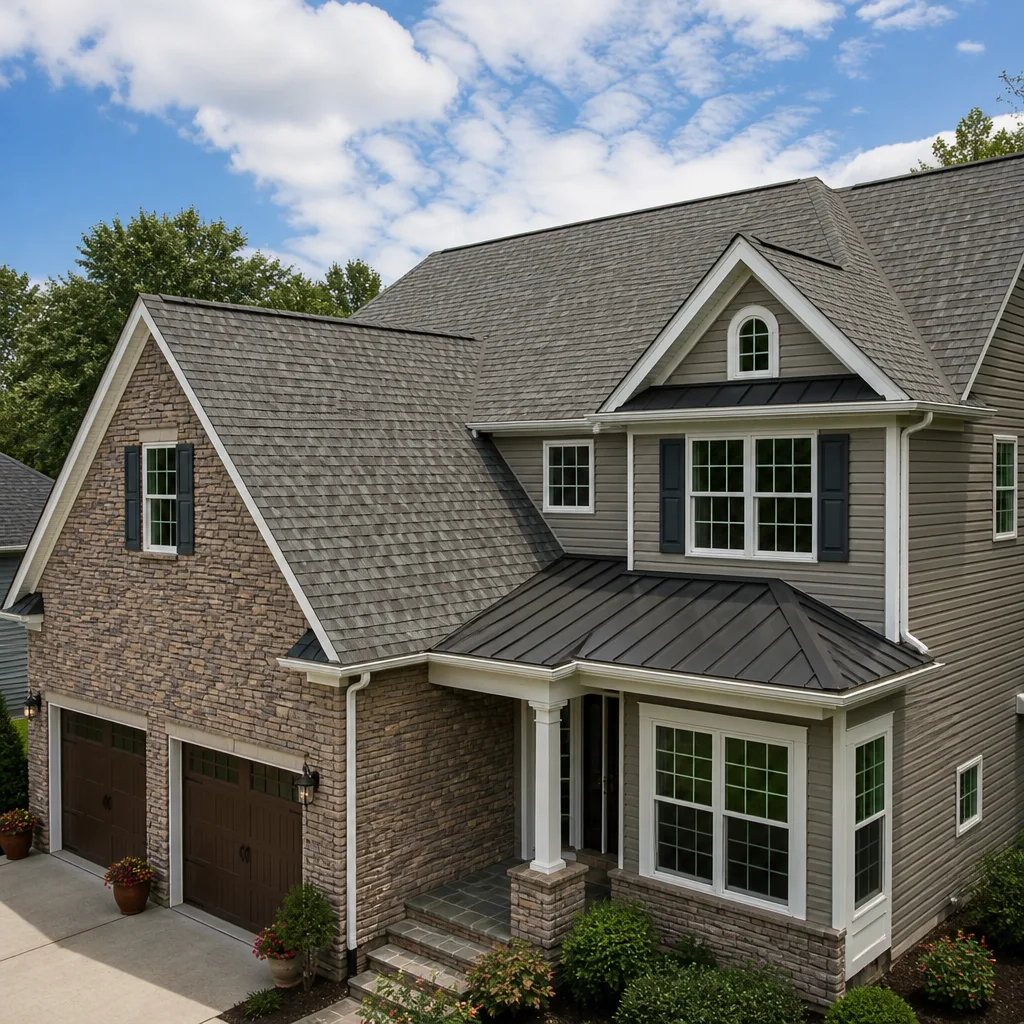 Architectural shingles
 Tile roofing
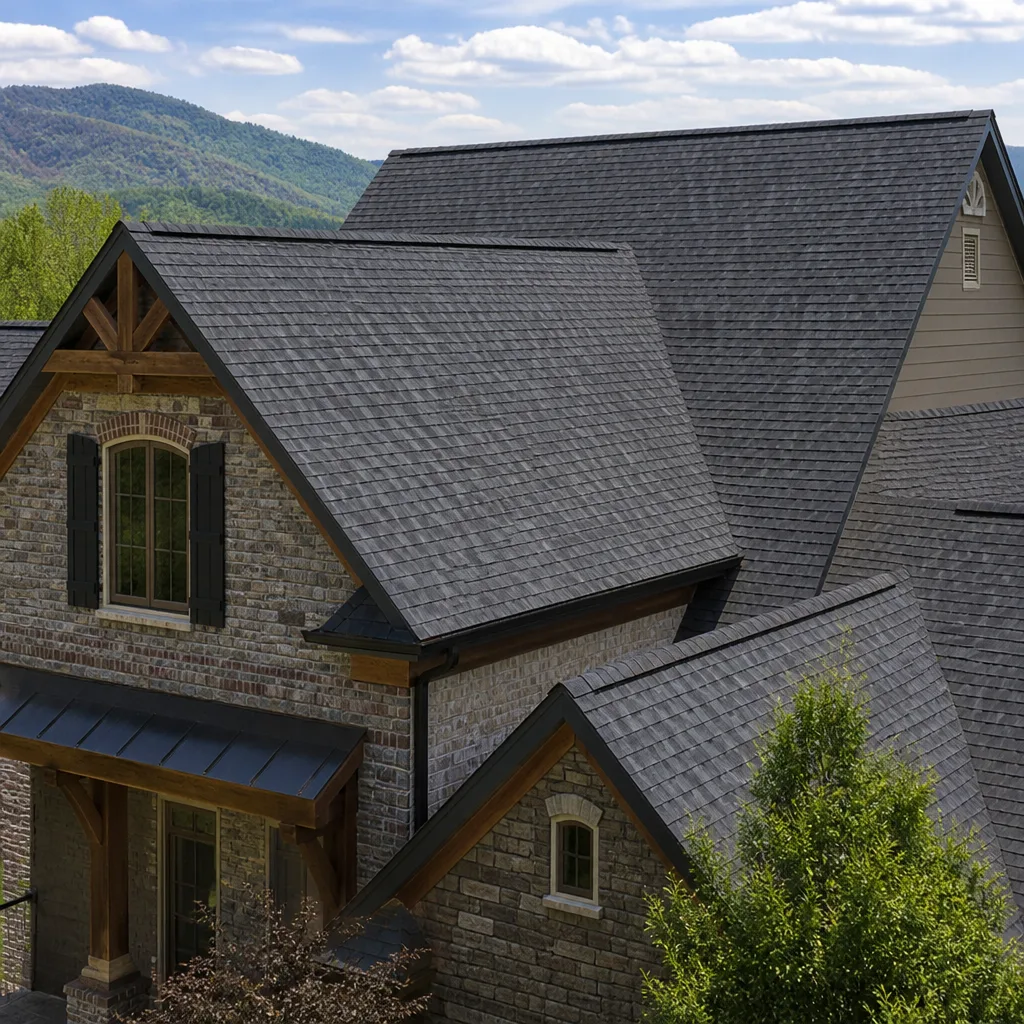 GAF
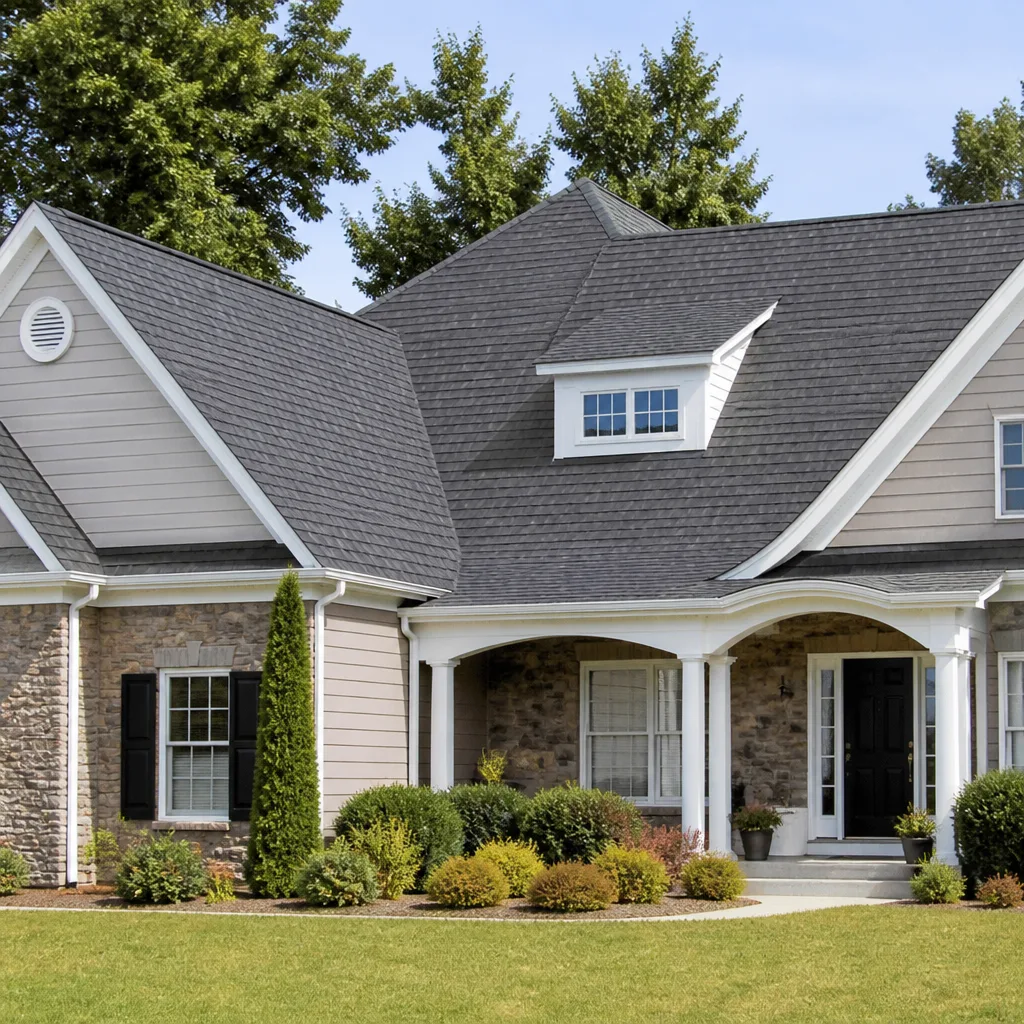 Owens Corning
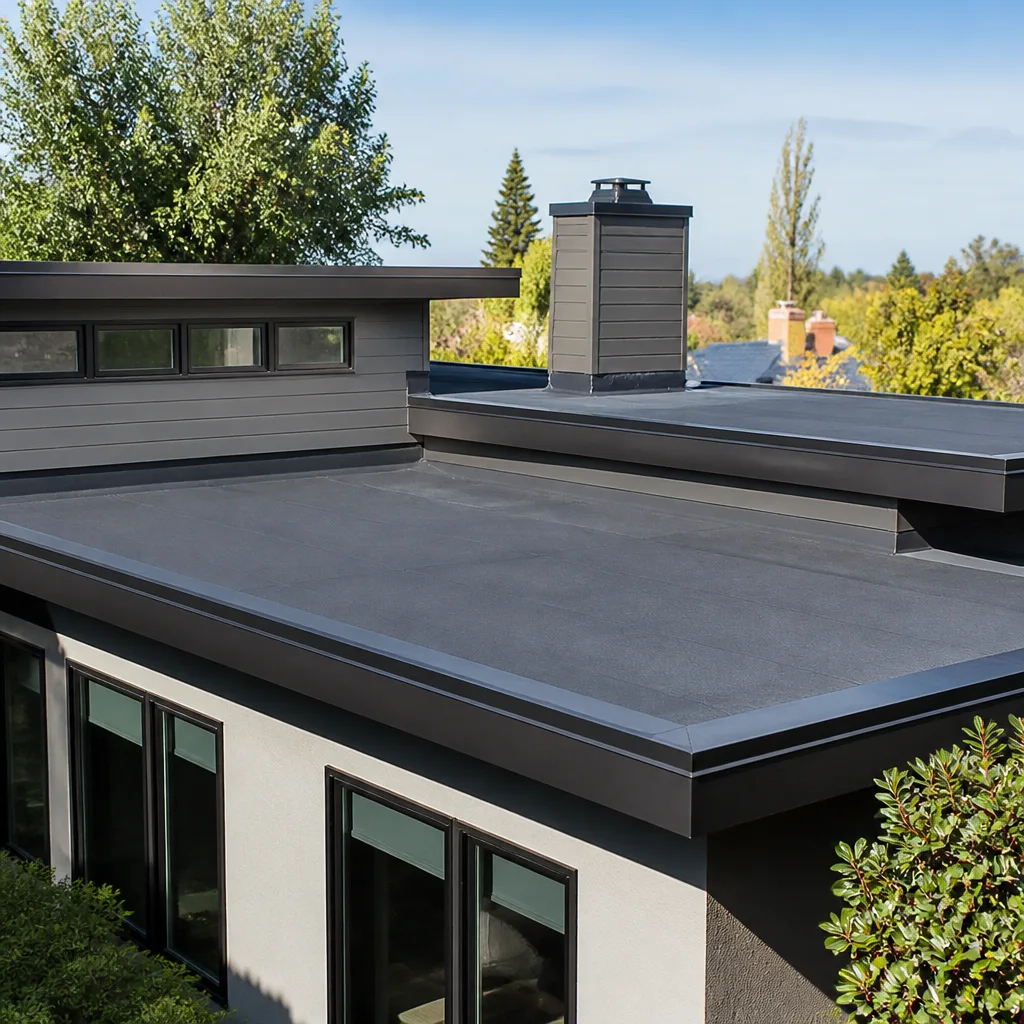 Flat & low-slope
Free roof inspection with deck photos before we talk money - GAF and Owens Corning certified installation
The Complete Guide to Roofing in Mission Viejo
Mission Viejo sits in a bowl-shaped valley that traps marine moisture at night and bakes under roughly 280 days of sun each year. That combination degrades standard 3-tab shingles up to 30% faster than manufacturer lifespan ratings suggest, which means your roofing decisions here carry more weight than they would twenty miles inland. This guide maps every major roofing choice to the specific conditions of the Saddleback Valley, from material selection to HOA compliance, so you can make a decision that actually holds up. For related reading, see our Complete Roof Repair Guide for Mission Viejo Homeowners. You’ll learn what works in Mission Viejo, what fails early, what permits cost, and how to avoid the expensive mistakes we see on rooftops throughout this city every year.
Quick Answer
Roofing in Mission Viejo means choosing materials that survive coastal humidity cycling, intense UV exposure, and occasional Santa Ana gusts, while meeting HOA aesthetic rules that limit colors and profiles in most neighborhoods. The most durable options here are concrete tile and architectural asphalt shingles from brands like GAF, CertainTeed, and Owens Corning, installed by a contractor who understands the city’s specific code requirements and microclimate. A full roof replacement in Mission Viejo typically runs between $12,000 and $38,000 depending on material and roof complexity, and you should always confirm HOA compliance before buying materials.
Styles & brands we work with
Table of Contents
- Why Mission Viejo’s Microclimate Changes Everything
- Material Options That Actually Work in Mission Viejo
- HOA Rules: What You Can and Cannot Put on Your Roof
- The Seven-Brand Question: Which Shingle Lasts Here?
- City Permits and the Inspection Sequence
- Switching Between Tile and Architectural Shingles
- What Roofing Actually Costs in Mission Viejo
- Maintenance and Inspection: What to Do Every Year
Why Mission Viejo’s Microclimate Changes Everything
Mission Viejo sits in the Saddleback Valley, a topographic bowl that catches cool marine air from the Pacific each night. That air brings moisture. When it settles over your roof, it condenses on shingle surfaces, tile underlayment, and flashing. Then the morning sun burns it off. This daily wet-dry cycle is what accelerates roof aging here in ways you won’t see in Temecula or Riverside, where the air stays drier overnight.
What this means in practical terms: standard 3-tab asphalt shingles, which are already the budget option, lose granules faster under this cycling. The adhesive strips that seal shingles together weaken when heat follows moisture day after day. We regularly see 3-tab roofs in the older neighborhoods off La Paz Road showing significant granule loss by year ten, when the same shingle might make it to fifteen or sixteen in a drier inland city.
The UV index in Mission Viejo also runs high. The city averages more than 280 sunny days annually, and the elevation of much of the city, between 400 and 700 feet, means ultraviolet exposure is slightly stronger than at sea level. UV breaks down the asphalt compounds in shingles and can fade tile coatings. And then there are the Santa Ana winds, which gust through the Saddleback Valley from the northeast in fall and winter, lifting shingle edges and testing every flashing seam.
The takeaway: a roof in Mission Viejo is not a generic Southern California roof. It needs materials rated for coastal humidity, high UV, and wind uplift. When you shop, ask specifically about wind ratings and humidity resistance, not just price per square.
Material Options That Actually Work in Mission Viejo
You have four realistic material choices for a Mission Viejo roof: concrete tile, architectural asphalt shingles, 3-tab asphalt shingles, and standing seam metal. Each behaves differently under local conditions.
Concrete Tile
Concrete tile dominates Mission Viejo, and for good reason. It handles UV exposure better than any asphalt product, holds up to the marine-layer moisture cycle, and carries Class A fire ratings that matter in a region with wildfire risk on the eastern edge. The downside is weight. Tile requires a roof structure built or reinforced to handle roughly 900 to 1,100 pounds per square, compared to about 300 to 400 pounds per square for asphalt shingles. If your home was built with tile, you’re set. If it wasn’t, switching to tile usually means structural engineering and added framing cost.
Architectural Asphalt Shingles
Architectural, or dimensional, shingles are thicker than 3-tab, with multiple layers that resist wind uplift and UV degradation better. They cost less than tile and work on most Mission Viejo roof structures without modification. The better lines from GAF, CertainTeed, and Owens Corning carry wind ratings up to 130 mph, which exceeds what Santa Ana events typically produce here. If your HOA allows asphalt, this is usually the smart middle-ground choice.
3-Tab Asphalt Shingles
The budget option. We mention these only to caution against them. Under Mission Viejo’s moisture cycling and UV load, 3-tab shingles fail early and often. They are the product most likely to curl, crack, and lose granules before their rated lifespan ends.
Standing Seam Metal
Metal roofs perform well technically, but they are uncommon in Mission Viejo residential neighborhoods because most HOAs restrict them. If you live in a community without architectural review, standing seam metal offers excellent longevity and handles the microclimate well. If you’re in a Lake Mission Viejo or similar association, you’ll likely be told no.
HOA Rules: What You Can and Cannot Put on Your Roof
Mission Viejo is one of the most HOA-dense cities in Orange County. Most of the city’s residential communities fall under at least one homeowners association, and many fall under two: a master association like Lake Mission Viejo Association plus a sub-association for the specific tract. That means your roof is not entirely your own decision.
Here’s the sequence we recommend for checking compliance before you buy a single bundle of shingles:
- Identify your governing associations. Start with your tract name, the community management company, and the master association if one applies. Your property tax bill or closing documents will list them.
- Pull the architectural guidelines. Most Mission Viejo HOAs publish roof color palettes, approved material lists, and profile restrictions. Some restrict you to specific tile profiles like flat shake or barrel.
- Check the color palette against your preferred material. We have seen HOAs in Mission Viejo approve only earth tones, greys, and certain browns, ruling out anything blue, green, or black.
- Submit your roof plan for architectural review before signing a contract. This costs nothing and prevents a very expensive mistake.
- Get the approval letter in writing. Verbal approvals disappear. Written ones protect you if a board member changes their mind.
Some Mission Viejo communities also restrict roof-to-wall ratio or require that any replacement match the original roof in material and profile. If your home was built with a specific tile from Boral or a particular CertainTeed color, your HOA may require you to stay in that family. This is where working with a contractor who knows multiple brands pays off: you can match the existing roof rather than being forced into whatever product a single-brand contractor happens to sell.
The Seven-Brand Question: Which Shingle Lasts Here?
We work with seven roofing manufacturers: GAF, CertainTeed, Owens Corning, IKO, Atlas, Tamko, and Boral. That’s unusual in the roofing trade, where many contractors are certified with one brand and push it exclusively. We carry seven because the right shingle for a Mission Viejo roof depends on the specific roof, not on what we happen to have in the warehouse.
Here is how the major asphalt brands compare under actual Mission Viejo conditions, based on what we have observed across hundreds of local roofs:
- GAF: Strong wind ratings on their Timberline lines. Performs well under Santa Ana conditions. Widely available, which keeps replacement matching easy.
- CertainTeed: Excellent granule retention, which matters in high-UV climates. Their Landmark line handles the moisture cycling well. A strong choice for Mission Viejo’s sun exposure.
- Owens Corning: Good all-around performance, with color options that fit many Mission Viejo HOA palettes.
- Atlas: Solid mid-range performance. Less common on existing Mission Viejo roofs, which can make matching harder.
- IKO: Good value, though we see more variability in long-term granule hold on their lower lines.
- Tamko: Their Heritage line works acceptably in this climate. Availability can vary, which affects repair timelines.
- Boral: The tile standard in Southern California. If your Mission Viejo home has tile, it is likely Boral or a compatible profile. Boral’s concrete tiles are built for this exact climate.
The real variable is not the brand alone. It’s the specific line within each brand, the installation method, and whether the underlayment and flashing are specified correctly for Mission Viejo’s humidity. A premium shingle installed over the wrong underlayment will still fail early. We recommend asking any contractor to name the exact shingle line, not just the brand, and to explain why that line fits your roof’s exposure. For help vetting contractors, see How to Hire a Roofing Contractor in Mission Viejo: A Step-by-Step Guide.
City Permits and the Inspection Sequence
The City of Mission Viejo building department requires permits for roof replacement and for most significant roof repairs. The process is not complicated, but it has steps you should understand before you start.
- Contractor pulls the permit. Your roofing contractor submits the roof plan, material specifications, and product approvals to the City of Mission Viejo. If structural work is required, such as adding framing for tile, an engineer’s letter goes in at this stage.
- Plan review. The city reviews the submittal. Simple shingle replacements clear quickly. Tile conversions or structural changes take longer.
- Permit issuance. The permit is issued and the job is scheduled. The permit will list the inspections required.
- Mid-roof inspection. The city inspects the underlayment and any structural work before the finished material goes on. This is the critical inspection. If the underlayment is wrong, the city will flag it here.
- Final inspection. After the roof is complete, the inspector checks the finished surface, flashing, and drainage. Once the final inspection passes, your permit is signed off.
If you’re doing a roof replacement in Mission Viejo, expect the full permit process to add a few days to the timeline. If you’re doing a repair, the permit path is usually shorter. Either way, don’t work with a contractor who offers to skip permits. Unpermitted roof work becomes a problem when you sell the house, and Mission Viejo buyers tend to ask.
Switching Between Tile and Architectural Shingles
About half the homes in Mission Viejo were built with concrete tile, and at some point many of those homeowners ask whether they can switch to architectural shingles to save money. The short answer: yes, sometimes, but not cheaply.
Switching from tile to shingles requires removing the tile, stripping the roof deck to the framing, removing the old batten system if one exists, and then installing the shingle roof. The roof structure may need to be re-sheathed, because tile roofs are not always decked with the same solid plywood or OSB that shingle roofs require. This is a full tear-off, not an overlay.
Switching the other direction, from shingles to tile, is more expensive still. Your roof structure must be evaluated by an engineer to confirm it can carry the added weight of concrete tile, which runs about three times heavier per square than shingles. Many Mission Viejo homes built with shingles were framed for shingle weight and will need additional structural reinforcement before tile can go on. That reinforcement alone can add $8,000 to $20,000 depending on the roof’s size and framing configuration.
There is also the HOA question. If your Mission Viejo community was originally built with tile, your HOA will almost certainly not approve a switch to shingles, even if the city would permit it. Check your architectural guidelines before you spend time pricing a conversion.
Our general guidance: if your home has tile, keep tile. The material already matches the local climate and your HOA’s expectations, and a well-maintained tile roof in Mission Viejo can last 40 to 50 years. If you want a different look, a color or profile change within the approved palette is your most practical move.
What Roofing Actually Costs in Mission Viejo
Roof pricing in Mission Viejo runs higher than the national average, driven by permit costs, HOA compliance requirements, and the labor market in Orange County. Here is what you should expect for a typical single-family home roof of roughly 2,200 square feet:
- Architectural shingle replacement: $14,000 to $24,000
- Concrete tile replacement (like-for-like): $22,000 to $38,000
- 3-tab shingle replacement: $9,000 to $14,000
- Shingle-to-tile conversion: $30,000 to $50,000+, including structural work
- Tile-to-shingle conversion: $18,000 to $30,000, including tear-off and re-sheathing
- Roof repair (localized, non-structural): $450 to $1,800 depending on scope
- Standalone roof inspection: $200 to $500, often credited toward work if you proceed
- City of Mission Viejo permit fees: Typically $300 to $900 depending on project scope
These ranges reflect what we have quoted for Mission Viejo roofs over recent years. The single biggest variable is the condition of the roof deck once the old material comes off. Rotted or delaminated sheathing changes the price materially, which is why we recommend a roof inspection in Mission Viejo before you set a budget. An inspection tells you what’s under the shingles, not just what’s on top of them.
One more note on cost: the cheapest quote in Mission Viejo is rarely the cheapest roof. A contractor who underbids the job almost always makes it up on change orders once the deck is exposed. Get your quote in writing, ask whether the deck replacement is included, and have the contractor walk the roof with you before you sign.
Maintenance and Inspection: What to Do Every Year
A Mission Viejo roof needs annual attention, not because it’s fragile, but because small problems compound quickly in this climate. A cracked tile that lets moisture into the underlayment, a lifted shingle edge that catches one Santa Ana gust, a clogged valley that pools water during marine-layer condensation: each of these is a $300 repair in year one and a $3,000 repair in year five.
Here is the annual maintenance sequence we recommend for Mission Viejo homeowners. For more guides & resources on protecting your roof, visit our blog:
- Visual check from the ground each fall. Look for missing granules in gutters, lifted edges, cracked tiles, and anything that looks out of place. You don’t need to climb up, just walk the perimeter.
- Clear gutters and valleys before the wet season. Mission Viejo’s rain comes in short bursts. A clogged valley backs water up under shingles fast.
- Check flashing after Santa Ana events. High wind is the enemy of flashing, especially around chimneys, skylights, and vent pipes. After a significant Santa Ana, give those areas a look.
- Schedule a professional inspection every two to three years. This is not a upsell exercise. A proper inspection catches granule loss, seal strip failure, underlayment wear, and flashing gaps before you see them from the ground. Our inspection stand exists as a standalone service for exactly this reason: you can get an honest assessment without being pushed into a replacement.
If you’re not comfortable getting on a ladder, don’t. Hire someone. A roof inspection from the ground misses almost everything that matters, and walking a tile roof without the right equipment and knowledge risks damaging the tiles you’re trying to inspect.
Common Mistakes to Avoid
- Skipping the HOA review before buying materials. We have watched homeowners purchase and stage shingles or tile only to have the architectural committee reject the color. In Mission Viejo, the HOA comes first, not last. Check your palette, get written approval, then buy.
- Choosing 3-tab shingles to save money. Under local humidity and UV cycling, 3-tab fails years before its rating. You will pay for the savings twice: once in replacement cost, once in the repair work that precedes it.
- Hiring a single-brand contractor by default. If a contractor only installs one manufacturer’s product, their recommendation is not a recommendation. It’s a sales position. A roof’s needs should drive the brand choice, not the contractor’s inventory.
- Accepting a quote without deck replacement language. Every Mission Viejo roof tear-off reveals at least some deck work. If your quote doesn’t state how deck replacement is priced, you’re buying a change order you just haven’t received yet.
- Overlaying new shingles over old. Some contractors still offer overlay work to cut cost. It hides deck problems, adds weight the structure wasn’t designed for, and shortens the new roof’s life. The City of Mission Viejo will not permit reroofing over an existing shingle layer in most cases anyway.
- Ignoring the underlayment question. In Mission Viejo’s moisture cycle, the underlayment is as important as the surface material. Ask what underlayment is specified and why. A premium shingle over a bargain underlayment is a false economy.
- Waiting until the roof leaks to act. By the time water is coming through your ceiling in Mission Viejo, the damage has been developing for months. The annual maintenance sequence above costs a fraction of what a leak repair costs.
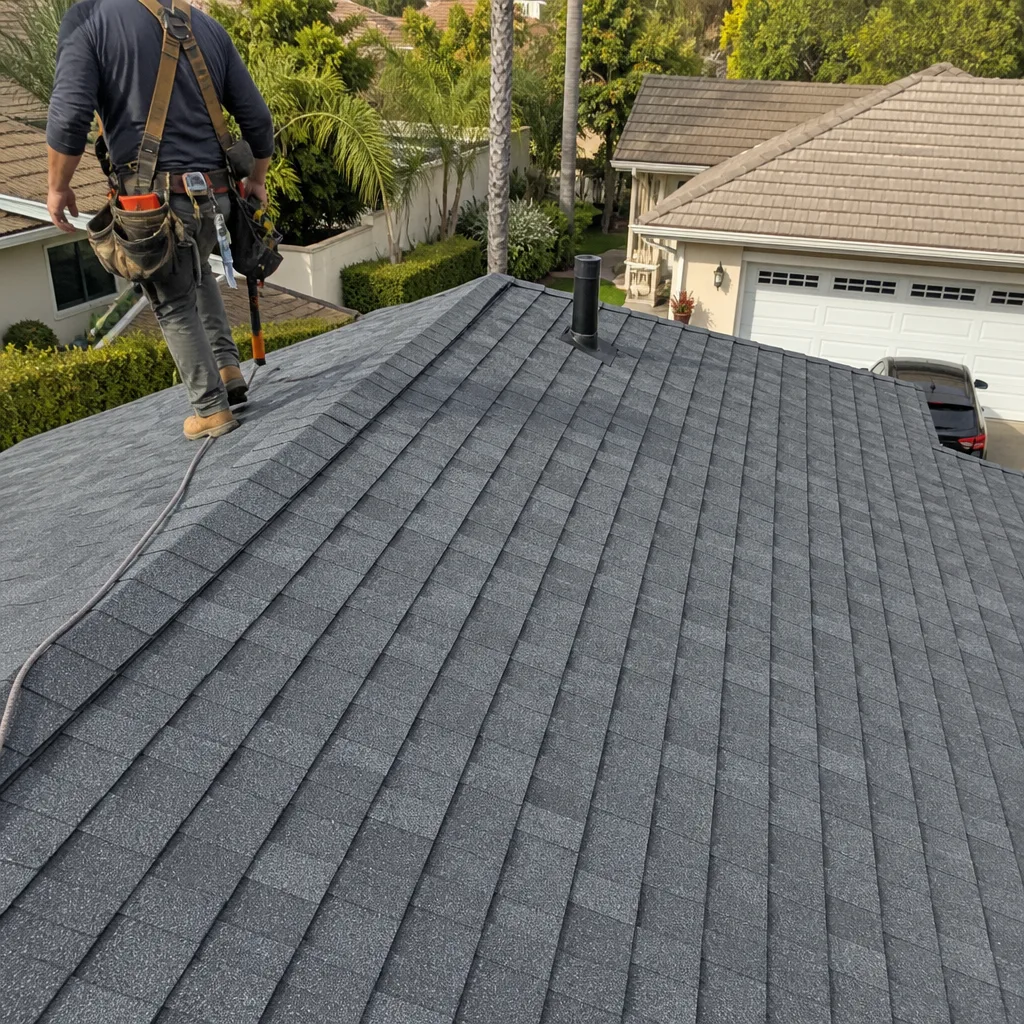
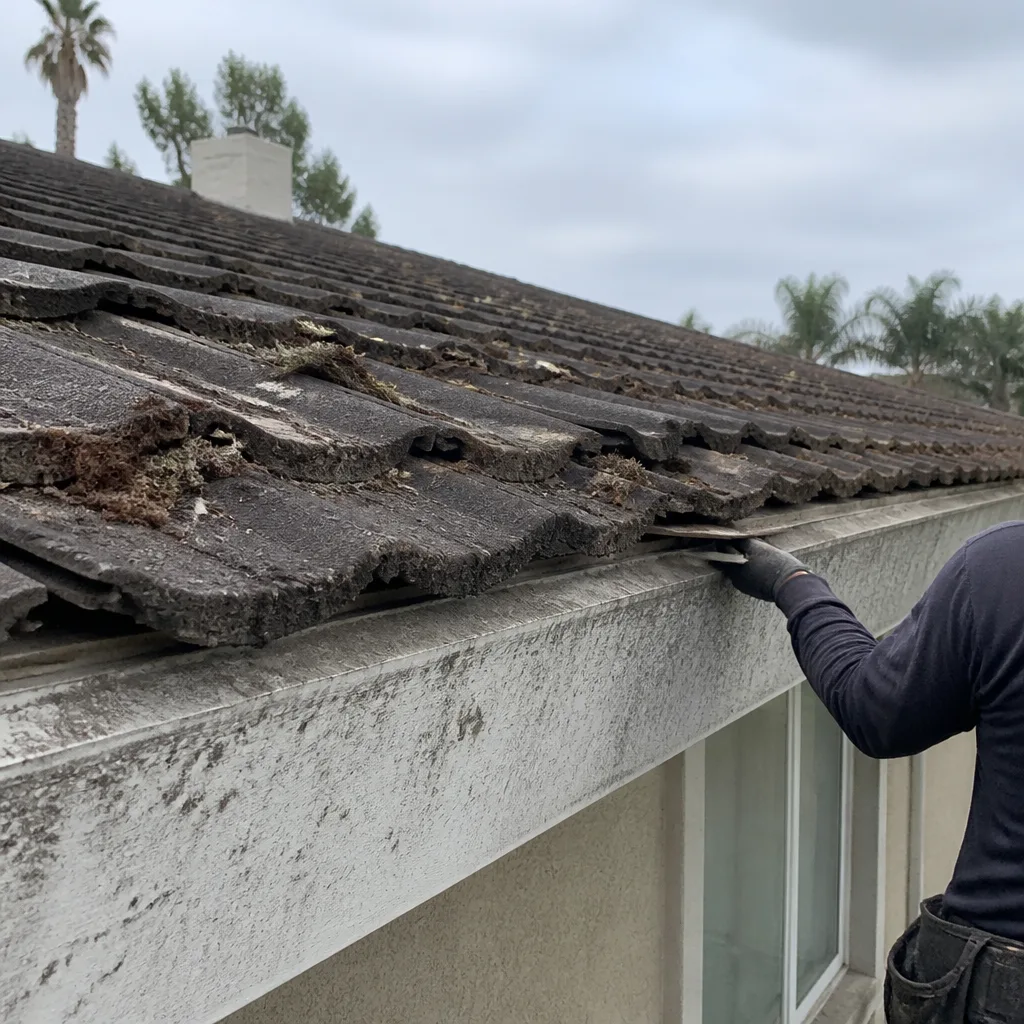
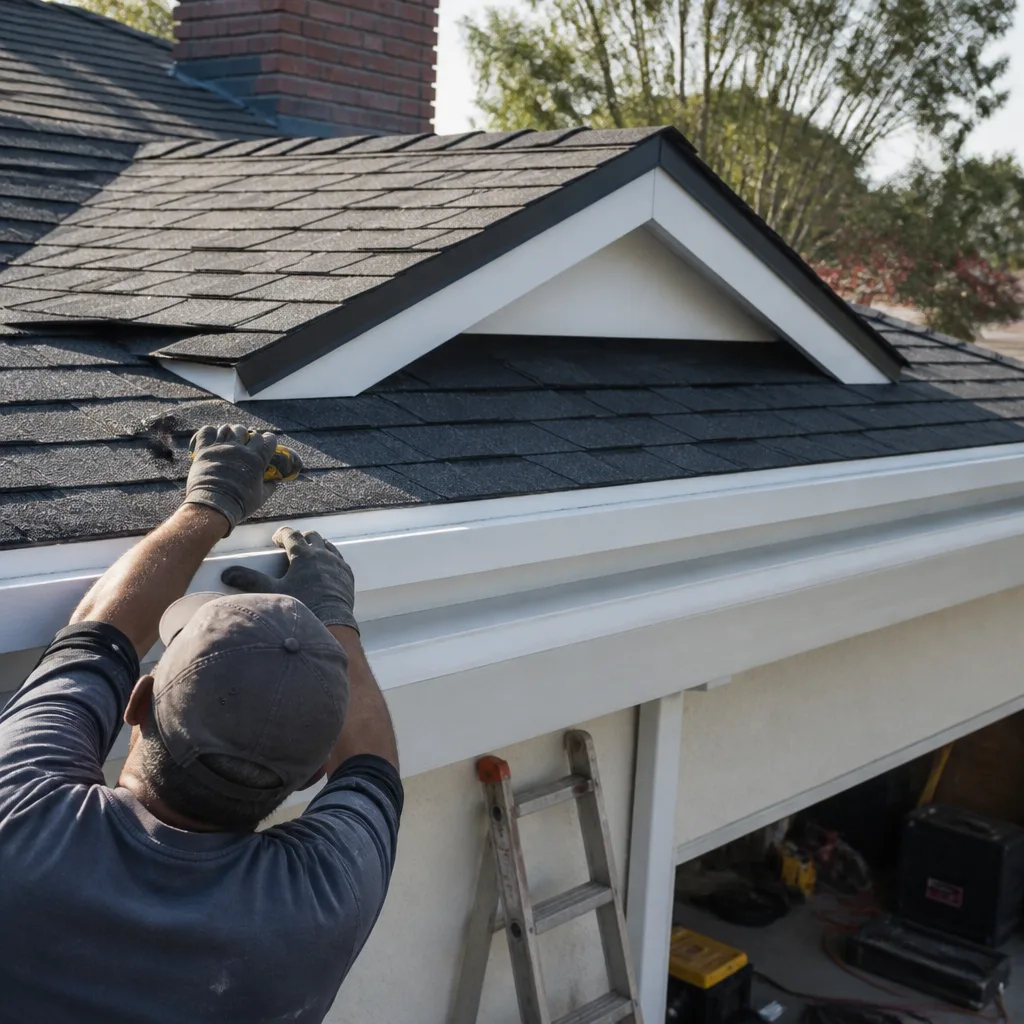
See the difference
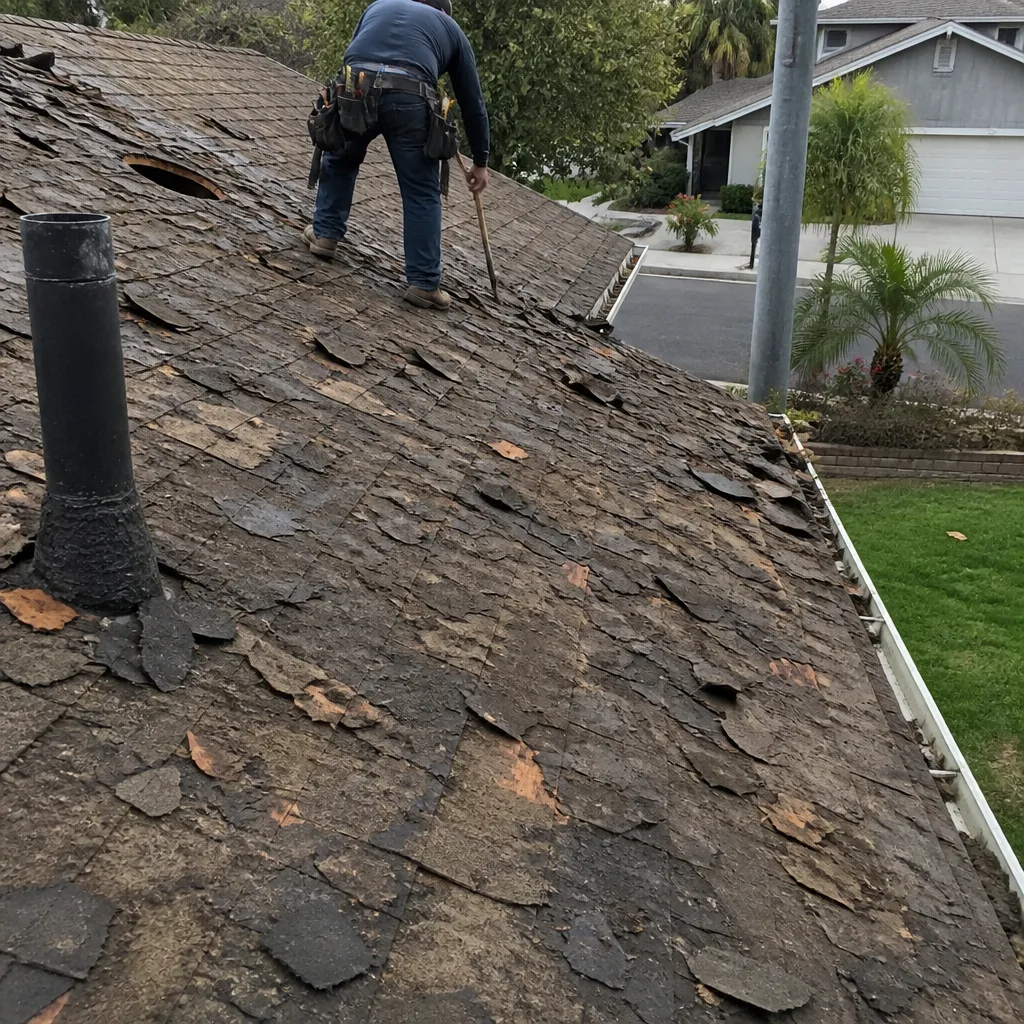 Before
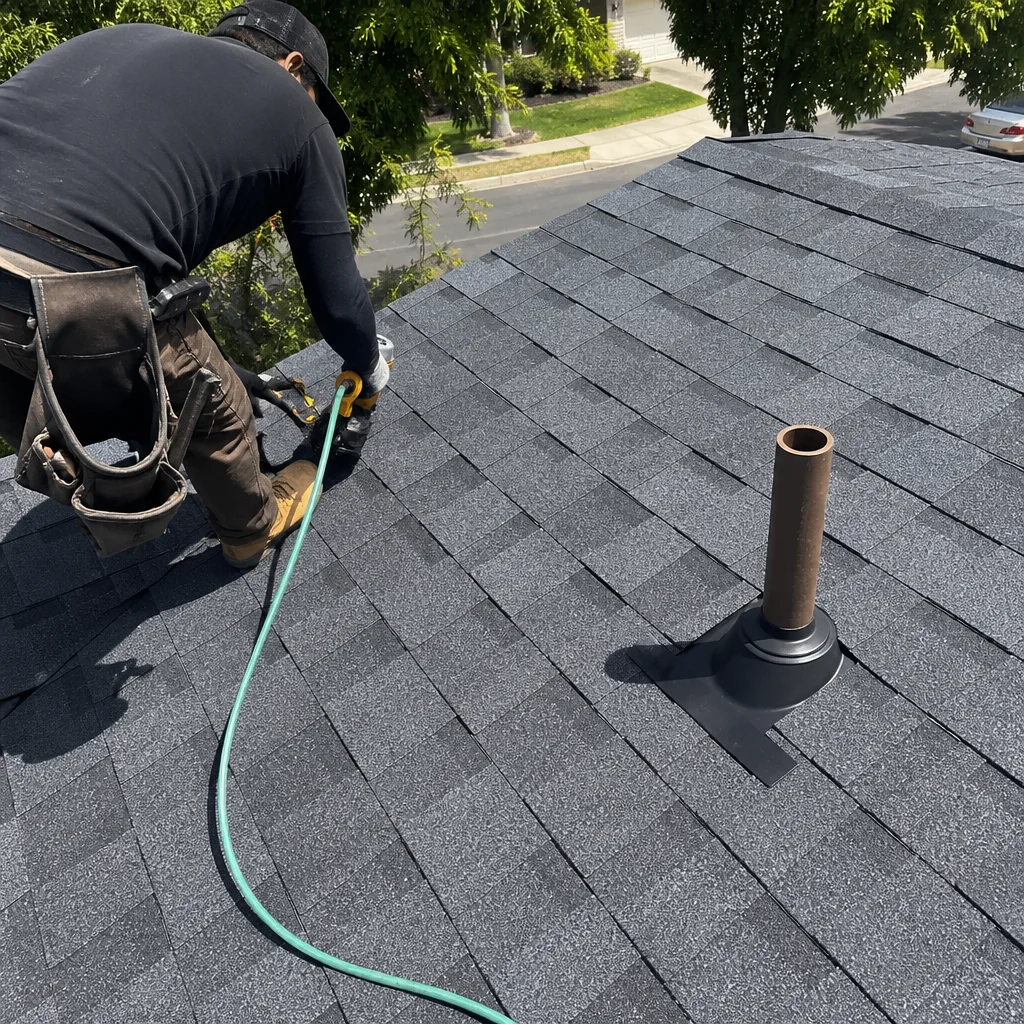 After
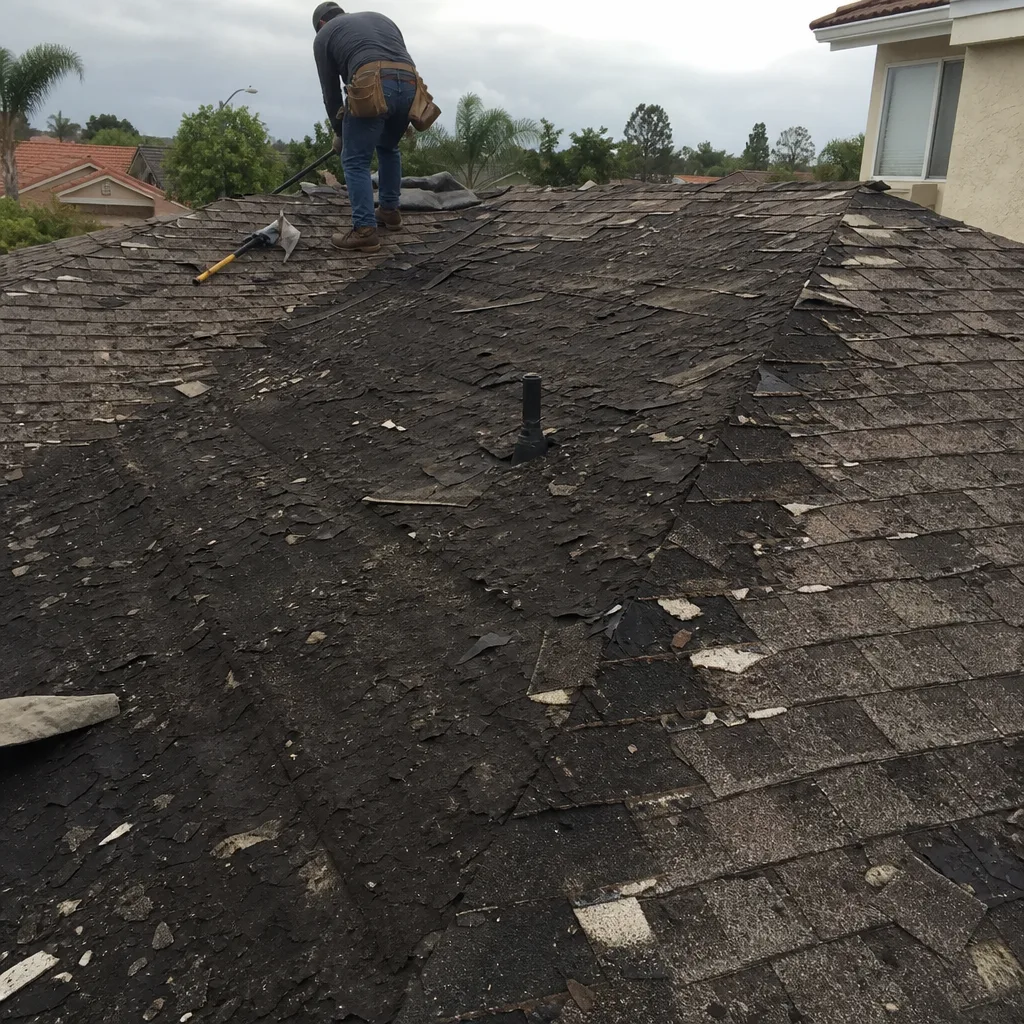 Before
 After
 Before
 After
When to Call a Professional
Some roofing questions answer themselves, and some don’t. Call a professional when you see granule loss covering your gutters, when shingle edges curl or lift after wind, when tiles crack or slide, when you find water staining on ceilings or attic framing, or when your roof is approaching twenty years of age and you want an honest read on its remaining life. Also call if you have bought or are buying a Mission Viejo home and the seller cannot produce roofing records. A professional walk-through tells you what you’re inheriting. Briarwood Roof Repair offers free estimates in Mission Viejo, and we work with seven roofing brands so the assessment reflects what’s actually on your roof, not what we’re trying to sell. Call (855) 707-6114 to schedule.
Frequently Asked Questions
A full roof replacement in Mission Viejo typically costs between $12,000 and $38,000 depending on the material, roof size, and whether structural work is required. Architectural shingles run $14,000 to $24,000 for a typical 2,200-square-foot roof, while concrete tile replacement runs $22,000 to $38,000. Call (855) 707-6114 for a free, written estimate specific to your home.
Concrete tile roofs in Mission Viejo commonly last 40 to 50 years with proper maintenance, architectural shingles 20 to 30 years depending on brand and line, and 3-tab shingles 10 to 15 years at best under local sun and humidity. The marine-layer moisture cycle and high UV index shorten the lifespan of all asphalt products compared to inland locations.
Yes, in most Mission Viejo communities you need HOA architectural review before replacing your roof, and the review must happen before you buy materials. The specific requirements vary by association, but most publish approved color palettes and material lists in their architectural guidelines.
Technically yes, if your roof structure allows it and your HOA approves the change. In practice, most Mission Viejo HOAs that originally specified tile will not approve a shingle conversion. The switch also requires a full tear-off and often new roof decking, which makes it more expensive than a like-for-like tile replacement.
Most roof replacements and significant repairs require a permit through the City of Mission Viejo building department. Minor repairs that don’t involve structural changes or large tear-off areas may be exempt, but your contractor should confirm with the city before starting work. Unpermitted roof work can create problems when you sell the home.
Concrete tile is the best performer in Mission Viejo’s specific conditions of marine-layer humidity, high UV exposure, and Santa Ana winds, provided the roof structure supports its weight. Architectural shingles from brands like GAF and CertainTeed are the best asphalt option, combining wind resistance and granule retention in the local climate. 3-tab shingles are the worst choice for this city.
The Bottom Line
Roofing in Mission Viejo is governed by three forces most general guides miss: a moisture-trapping valley microclimate, a high-UV solar exposure, and HOA aesthetic rules that restrict your material and color choices before you ever talk to a contractor. The winning approach is to check your HOA guidelines first, choose a material matched to the climate rather than to the lowest bid, permit the work properly through the city, and maintain the roof annually so small problems don’t become structural ones. Seven brands, one team: we work with the brand already on your roof, which keeps the recommendation honest and the result compatible. When it’s time for a repair, replacement, or simply a real assessment of what’s overhead, the Briarwood Roof Repair team is ready to walk your roof with you.
Written by the team at Briarwood Roof Repair, serving Mission Viejo since 2014.